Your customers’ inbox certainly has protection set up to prevent unwanted emails. However, to pass their validation, you only need to follow the rules described below. This will ensure that you reach recipients with your emails so that they be able to view the offer and consciously decide to use it.
See how to stay out of spam.
Spam in the mail represents up to 50% of the messages sent every day. For this reason, the use of spam filters has become a necessity. Recipients are unable to read such a large number of emails, especially those reaching corporate mailboxes.
Spam filtering programmes use various algorithms to determine whether a message is wanted by the user or not. They may focus on: headers and content, examine identifiers assigned by users, not pass addresses from blocked lists or only allow the receipt of emails from the Safe Senders list.
Therefore, an email deliverability strategy is needed to bypass spam filters and reach recipients’ inboxes.
Maximize your email deliverability and security with EmailLabs!
Firstly, always send emails from your own domain, i.e. one whose address is the same as your website. Sending newsletters or other bulk emails from different domains or free email addresses like Gmail increases the likelihood of ending up in spam.
Algorithms unable to determine the sender’s identity will assume that they are sending spam. It is also important to use a single sender name with a simple and credible name, such as first and last name@, newsletter@ or marketing@.
The second important aspect is to authenticate your bulk email domain so that the email service provider can send them on your behalf. This will ensure that the filters treat you as a reliable message deliverer.
DKIM is used to validate emails – it verifies that an email was actually received from a given email address .A digital signature is emitted from all emails sent. These are encrypted data including message body or header, email address, and other data. If an incoming server receives a DKIM message, it recreates the signature in the corresponding public key. A matching email can significantly enhance deliverability. In a failure scenario this will be interpreted by the server as hinting at the possibility that the receiver is not what the sender claims.
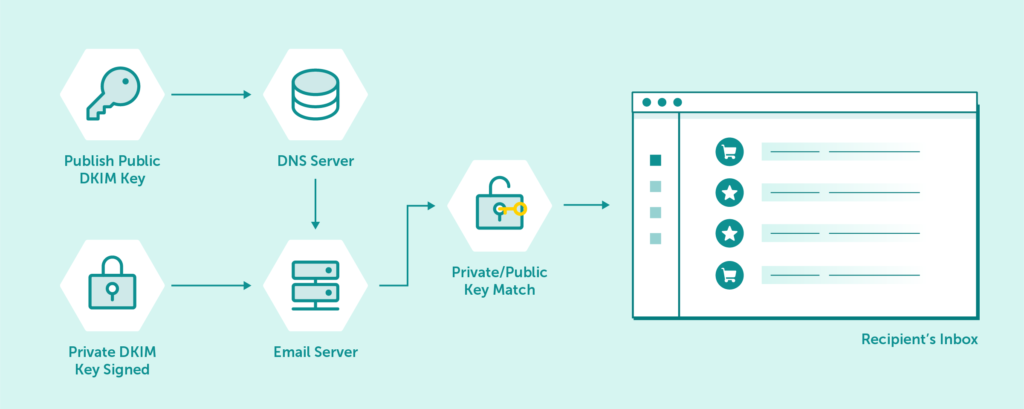
Setting up DKIM helps prevent your emails from landing in the SPAM folder.
It is also important to build and maintain a good sender reputation. It is given based on the quality of the campaigns sent out, their frequency, the number of recipients and their engagement. It can be negatively affected by the following factors:
Your email delivery depends largely on your sender’s reputation – if your sender’s IP reputation address is bad, messages can’t get into the recipient’s inbox. DNS stuff can tell you if you’ve been blacklisted from emails — something most unlucky emailers do not know!
Another key point is to check the reputation of your IP, a string of numbers that defines the identity and location of the server. It also determines to what extent your network is trustworthy when it comes to communication and information.
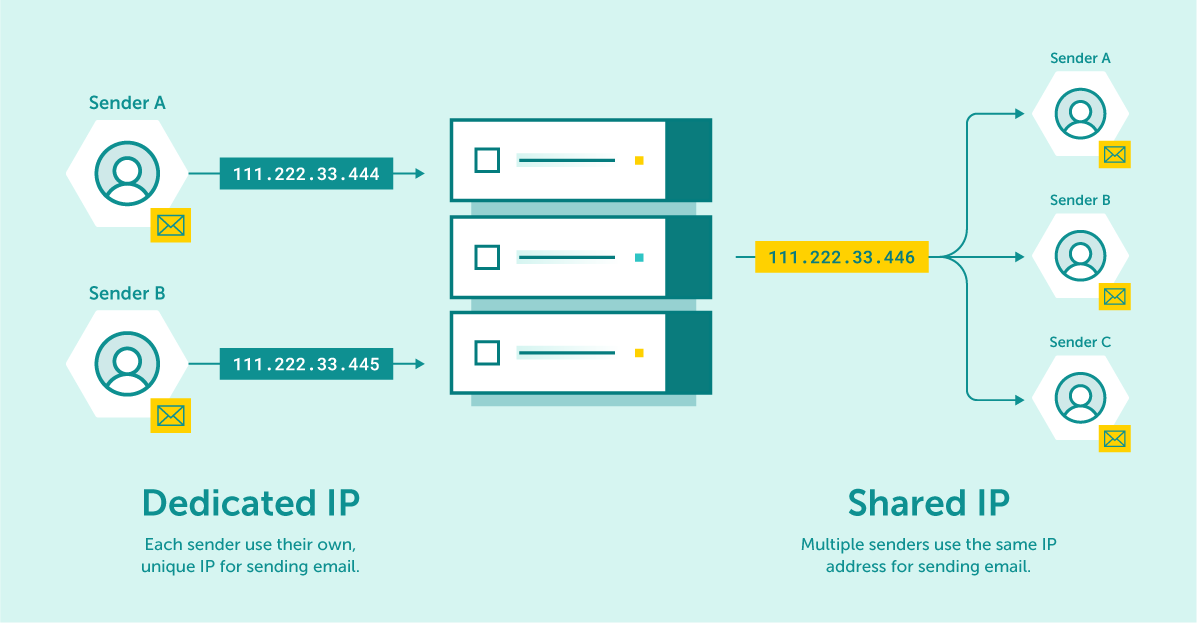
You can use a shared or individual IP address. Either solution has its good points.
With a dedicated address, you build up your own reputation and this will not be damaged by the actions of other users. With a shared address, on the other hand, you do not need to send a large number of messages per month to maintain a certain status, as a trusted email sender.
When choosing an email service provider (ESP – Email Service Provider), it is, therefore, worth checking what features it offers and how it takes care of the reputation of the servers.
It is also important to optimize the emails you send in terms of their assessment by the spam filters. To be considered valuable, messages should be:
HTML emails use HTML format which allows you to create attractive email messages using attractive graphic elements. By offering both the plaintext and HTML versions of the same email you not only signal that you are legitimate to your service providers.
The next method is to avoid certain words that suggest in advance that you are sending spam. Such risky phrases include those that indicate desperation, e.g. don’t miss out or click here, an intrusive nature, e.g. act immediately, or are unlikely, e.g. win 1,000,000 or 100% free.
Be careful about the size and number of graphics in your emails. Spammers have already tried to bypass spam filters by sending out emails containing only an image.
As a result, nowadays, a newsletter that has less text than pictures is more likely to end up in the spam. In addition, some email clients, such as Gmail and Outlook, do not display images by default unless recipients set this option or add the sender to the Safe Senders List.
For good deliverability, ensure that images do not exceed 40% of the email volume.
Maximize your email deliverability and security with EmailLabs!
A great way to check if your email will bypass the spam filter is to test it before sending it to customers. For this purpose, it is best to use the Seed List created in the most popular mailbox providers to verify the correct display of the email and inbox placement.
Such a test email will allow you to check the layout and readability of the text and improve it if necessary. In doing so, it will show whether it will be classified in the inbox or as spam.
If you want your messages to reach their recipients, do not use pre-purchased mailing lists. These usually contain a lot of outdated or non-existent addresses and spam traps, by which you may be considered a spammer. In turn, the newsletters you send will be marked as junk mail. Always use lists of your own customers who have agreed to receive information from you.
Allow users to unsubscribe. No such option may result in your messages being straight-marked as spam. Recipients want a choice, and by giving it, you increase your credibility.
In addition, you can use the unsubscribe as an opportunity for the customer to complete a short survey about why they are cancelling their subscription. Analyzing its results will help you eliminate mistakes in the future.
Make double-opting forms possible. The user submitting the subscription will receive confirmation by email. If you confirm your subscription, you will reduce your email spam rate. Double opt-in will decrease the chance of the subscriber reporting that you’ve posted something that’s deemed spam.
Leverage the right email headline (and preheader). This is the element that recipients see first, determining whether or not they will open it fully. It should be concise and clear, without capital letters, an excess of exclamation marks and the risky phrases described above. You may want to help yourself with one of the many guides on creating message headlines.
This is a proven way to optimize email deliverability and keep subscribers engaged. A clean list reduces the risk of hitting spam traps and losing your reputation as a sender.
Show that you are a reliable sender. First of all, include your registered office address in the footer so that recipients know they are dealing with a legitimate company. Also, inform them of the possibility of opting out of receiving emails from you and respect all such requests immediately.
This will increase your credibility and improve the deliverability of your emails.
Ask your subscribers to whitelist your address. The white list contains the addresses of trusted senders for that user. Being included ensures that messages sent from you should not be treated as junk mail.
Check the quality of the links you include in the messages you send out. They must direct to worthy domains. Your good reputation as a sender is linked to their reputation, so recipients must not be redirected to suspicious external sites.
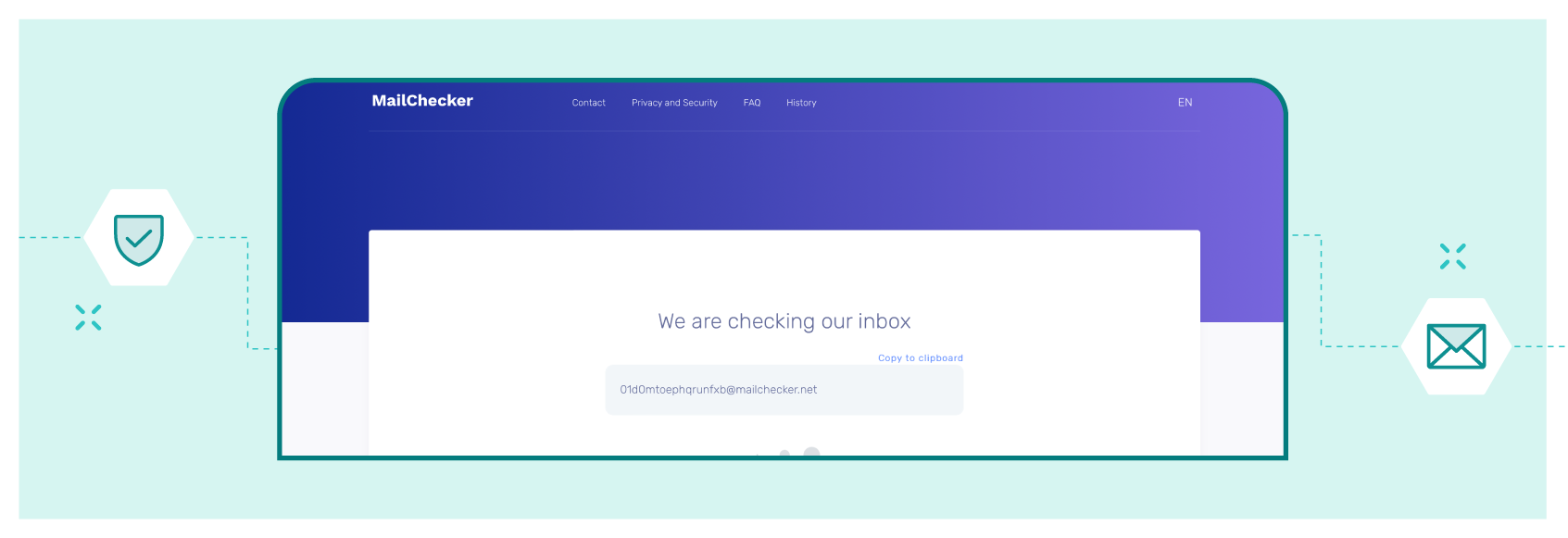
Such as MailChecker.net. This system tests whether a message will be considered valuable and make it to inboxes, treated as suspicious and end up in the spam or rejected by the receiving server right away.
You already know how to avoid being stopped by spam filters to reach as many recipients as possible. If you care about the high effectiveness of your transactional emails as well as marketing, we invite you to work with us.
We deliver a server infrastructure and access to an analytics panel, which, thanks to integration using email RESTful APIs and SMTP interfaces, guarantee deliverability of emails of up to 98.8%. We ensure email safety by using appropriate authentication protocols and security. If you need additional information about our offer, please feel free to contact us!
Read more about our service in the Cybersecurity and Cloud SMTP Integrations tabs.

Head of Marketing
As an Enterprise B2B Marketing Manager with a background in the email deliverability industry, I bring experience in crafting marketing strategies that boost engagement rates and optimize performance for large-scale enterprises. My expertise lies in merging data-driven insights with innovative marketing techniques to ensure that every campaign not only reaches its intended audience but also engages and converts. 🎯 In private - love animals more.. than everything. :)
See more articles
We live in a world where your customers switch seamlessly between laptops, smartphones, and tablets. They navigate a complex digital ecosystem – checking emails, using mobile apps, and reacting...
We are delighted to announce that Vercom S.A., the company behind the EmailLabs project, has successfully completed the ISO 22301 certification process. This significant achievement underscores our commitment to...

EmailLabs, as part of the Vercom group, proudly announces its full commitment to aligning its ICT services with the latest cybersecurity standards. In response to dynamically changing regulations, the...
We are pleased to announce that MessageFlow, a product from the Vercom S.A. group, has received the prestigious CSA (Certified Senders Alliance) Certification. This recognition not only underscores the...
Compliance & Security, Email Marketing, Security
TL;DR DMARCbis is now official: After years of work by the IETF working group, the DMARC specification has been formally updated. Three new documents, RFC 9989, RFC 9990, and...
Email Marketing, Gmail, New feature
TL;DR Gmail Live: a new feature enabling natural language voice search in the inbox, powered by the Gemini model. AI Inbox and AI Overviews: a revamped inbox interface featuring...
Best practices, Best practices, Email Authentication
TL;DR: Strategic Takeaways for C-Level and Marketing Leaders DKIM2 is not a minor DNS configuration update. It is a systemic response to two critical business problems: Replay attacks: scenarios...
Compliance & Security, Email Marketing, Security
TL;DR DMARCbis is now official: After years of work by the IETF working group, the DMARC specification has been formally updated. Three new documents, RFC 9989, RFC 9990, and...
Email Marketing, Gmail, New feature
TL;DR Gmail Live: a new feature enabling natural language voice search in the inbox, powered by the Gemini model. AI Inbox and AI Overviews: a revamped inbox interface featuring...
Best practices, Best practices, Email Authentication
TL;DR: Strategic Takeaways for C-Level and Marketing Leaders DKIM2 is not a minor DNS configuration update. It is a systemic response to two critical business problems: Replay attacks: scenarios...
AI, Antispam, Best practices, Deliverability
C-Level TL;DR: Strategic Takeaways Recipient consent as a foundation (Item 0): Sending email messages without explicit recipient consent (opt-in) poses a significant risk to your sending infrastructure. Attempting to...
AI, Antispam, Best practices, Deliverability
Executive TL;DR: Strategic Takeaways Deliverability Schism: The growing divide between sales automation technologies and the security standards enforced by major global mailbox providers (collectively referred to as MAGY) is...
Modern email systems no longer treat the primary inbox as the default destination for every message. The final classification of an email is the result of a multistage evaluation...
Best practices, Maile marketingowe, Marketing E-mails, Transactional Emails
Mass email sending is a critical strategy for business owners, marketers, developers, and nonprofit managers looking to scale their outreach. Whether you are announcing a new product feature, distributing...
Best practices, Marketing E-mails
Customer feedback is the fuel for business growth, but gathering it effectively requires more than just a list of questions. Survey emails remain the most direct channel for understanding...
Best practices, Email Marketing, Pytania i odpowiedzi
Mail merge combines a template document with data to create personalized communications. This technique saves time by automatically generating individualized letters, emails, and labels without manual entry. What Is...


