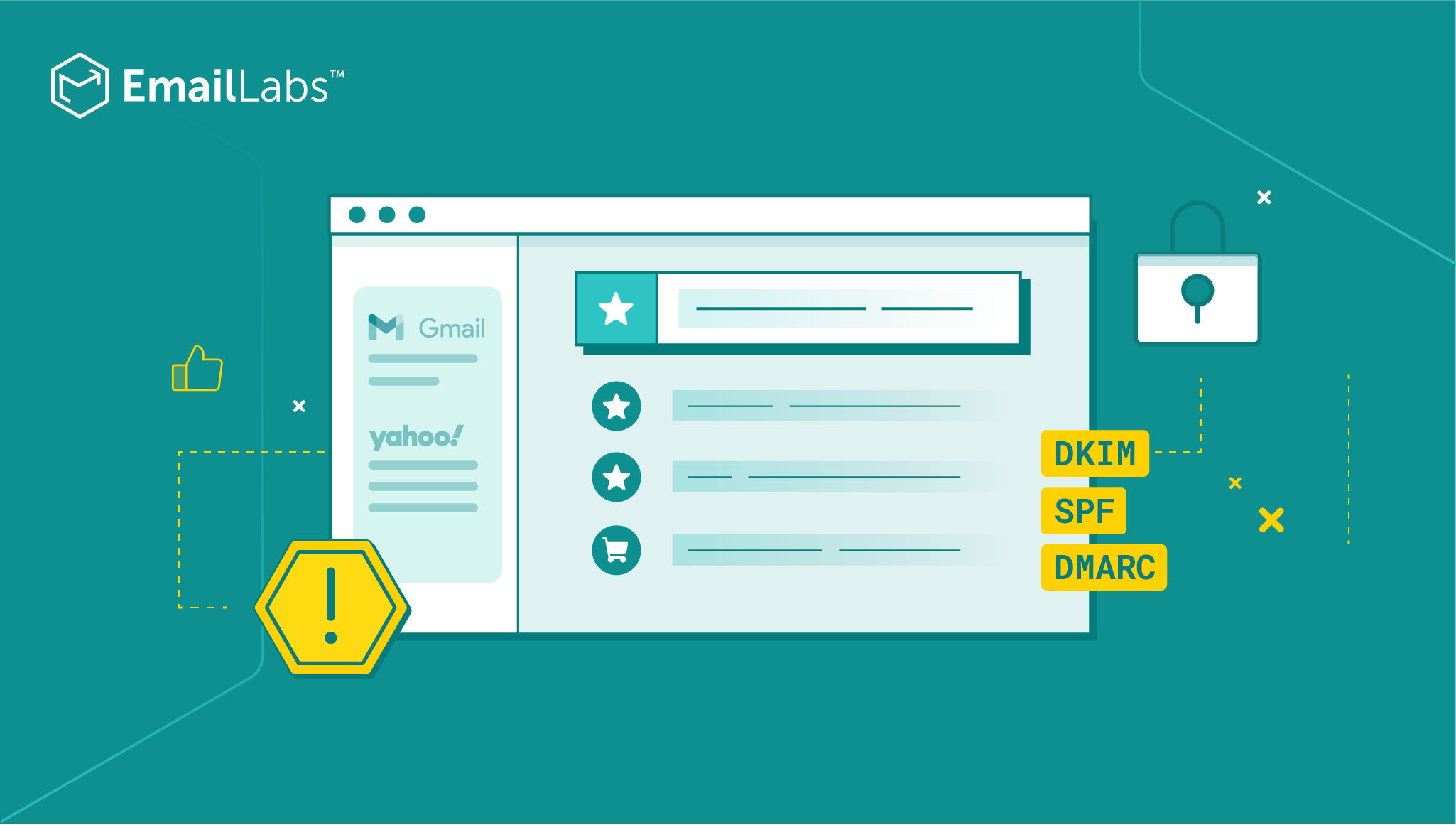
In an effort to bolster email security and protect users from malicious messages, Google and Yahoo are set to implement stringent email authentication requirements beginning in 2024.
Email marketing has become a crucial tool for businesses and organizations to connect with their audiences. However, with the increasing volume of email traffic and rising concerns about spam, ISPs like Gmail and Yahoo have implemented stringent requirements for large senders, those sending more than 5,000 emails daily.
These requirements focus on authenticating emails, making subscription processes user-friendly, and ensuring that the emails sent are genuinely desired by both Yahoo and Gmail recipients.
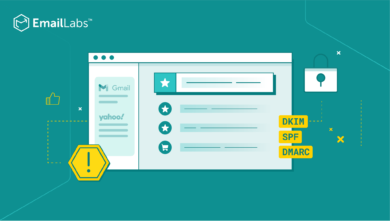
Both tech giants have recognized the necessity of strongly authenticating bulk email senders, and the implementation of established best practices such as DMARC, SPF, and DKIM is at the forefront of their strategy.
In this article, we will delve into these new Gmail and Yahoo requirements for bulk senders, providing insights and guidance for businesses and marketers.
The most forward answer to this question is that, if you haven’t already, you’ll need to get serious about certain email deliverability best practices. Starting in 2024, every email sender must authenticate their emails, allow for easy subscription, and stay under a reported spam threshold.
Remember, Gmail doesn’t provide traditional feedback loops like Yahoo does, so you’ll need to ensure you’re signed up with Google Postmasters Tools to monitor your spam rates.
So, the ball is now on the email sender’s court to prepare before 2024. What changes must you make to ensure your emails land in the inbox? And how do you implement them? Here’s a detailed list:
The year 2024 will mark a turning point for bulk email senders utilizing Gmail and Yahoo Mail. These senders will be mandated to adhere to robust email authentication protocols, including DMARC (Domain-based Message Authentication, Reporting, and Conformance), SPF (Sender Policy Framework), and DKIM (DomainKeys Identified Mail).
These industry-standard practices will help to ensure that the emails sent through these platforms are genuine and from verified sources, significantly reducing the risk of fraudulent messages.
Once your brand has implemented all three authentication standards—SPF, DKIM, and DMARC—then you’re just a few steps away from taking advantage of Brand Indicators for Message Identification (BIMI). When set up, BIMI displays a brand’s logo next to the sender’s name in the inbox.
Our recommendation is to set up both SPF and DKIM as the bare minimum to protect your sender identity and your deliverability and start taking steps toward DMARC authentication.
An essential part of responsible email marketing is ensuring that users can easily subscribe and unsubscribe from email lists. Gmail and Yahoo emphasize the importance of user-friendliness in this regard.
| Simple Opt-In Process | When users subscribe to your emails, make the process simple and transparent. Clearly state what they are signing up for and ensure they have full control over their subscription preferences. |
| Allow one-click Unsubscribes | Provide a clear and accessible unsubscribe option in every email you send. Make it as straightforward as possible for users to opt out of your emails. Failing to do so can lead to user frustration and spam complaints. |
| Respect User Choices | Honor unsubscribe requests promptly. Continuing to send emails to recipients who have unsubscribed is not only against best practices but can also result in email deliverability issues. |
By focusing on easy subscription and unsubscription processes, you not only meet Gmail and Yahoo’s requirements but also improve the user experience and build trust with your audience.
The most crucial aspect of email marketing is sending content that recipients genuinely want. Gmail and Yahoo have implemented measures to ensure that users receive relevant and desired emails, reducing the risk of messages being marked as spam.
By ensuring that your emails are wanted and relevant, you not only meet Gmail and Yahoo’s requirements but also maintain a good sender reputation and improve email deliverability.
As Gmail and Yahoo make these changes to create a safer email environment, it’s essential for senders to collaborate with industry peers. Sharing insights and experiences can foster a collective effort to meet the new requirements and ensure a high level of email security.
Gmail and Yahoo’s new requirements for bulk senders emphasize the importance of email authentication, easy subscription processes, and sending wanted emails.
Adhering to these new Yahoo and Gmail security requirements not only helps businesses comply with email service providers’ guidelines but also fosters trust with recipients and improves email marketing effectiveness.
It’s crucial for email marketers to stay informed about these requirements and proactively adapt their strategies to ensure successful email campaigns while maintaining a good sender reputation.

Head of Marketing
As an Enterprise B2B Marketing Manager with a background in the email deliverability industry, I bring experience in crafting marketing strategies that boost engagement rates and optimize performance for large-scale enterprises. My expertise lies in merging data-driven insights with innovative marketing techniques to ensure that every campaign not only reaches its intended audience but also engages and converts. 🎯 In private - love animals more.. than everything. :)
See more articles
We live in a world where your customers switch seamlessly between laptops, smartphones, and tablets. They navigate a complex digital ecosystem – checking emails, using mobile apps, and reacting...
We are delighted to announce that Vercom S.A., the company behind the EmailLabs project, has successfully completed the ISO 22301 certification process. This significant achievement underscores our commitment to...

EmailLabs, as part of the Vercom group, proudly announces its full commitment to aligning its ICT services with the latest cybersecurity standards. In response to dynamically changing regulations, the...
We are pleased to announce that MessageFlow, a product from the Vercom S.A. group, has received the prestigious CSA (Certified Senders Alliance) Certification. This recognition not only underscores the...
Compliance & Security, Email Marketing, Security
TL;DR DMARCbis is now official: After years of work by the IETF working group, the DMARC specification has been formally updated. Three new documents, RFC 9989, RFC 9990, and...

Email Marketing, Gmail, New feature
TL;DR Gmail Live: a new feature enabling natural language voice search in the inbox, powered by the Gemini model. AI Inbox and AI Overviews: a revamped inbox interface featuring...
Best practices, Best practices, Email Authentication
TL;DR: Strategic Takeaways for C-Level and Marketing Leaders DKIM2 is not a minor DNS configuration update. It is a systemic response to two critical business problems: Replay attacks: scenarios...
Compliance & Security, Email Marketing, Security
TL;DR DMARCbis is now official: After years of work by the IETF working group, the DMARC specification has been formally updated. Three new documents, RFC 9989, RFC 9990, and...
Email Marketing, Gmail, New feature
TL;DR Gmail Live: a new feature enabling natural language voice search in the inbox, powered by the Gemini model. AI Inbox and AI Overviews: a revamped inbox interface featuring...
Best practices, Best practices, Email Authentication
TL;DR: Strategic Takeaways for C-Level and Marketing Leaders DKIM2 is not a minor DNS configuration update. It is a systemic response to two critical business problems: Replay attacks: scenarios...
AI, Antispam, Best practices, Deliverability
C-Level TL;DR: Strategic Takeaways Recipient consent as a foundation (Item 0): Sending email messages without explicit recipient consent (opt-in) poses a significant risk to your sending infrastructure. Attempting to...
AI, Antispam, Best practices, Deliverability
Executive TL;DR: Strategic Takeaways Deliverability Schism: The growing divide between sales automation technologies and the security standards enforced by major global mailbox providers (collectively referred to as MAGY) is...

Modern email systems no longer treat the primary inbox as the default destination for every message. The final classification of an email is the result of a multistage evaluation...
Best practices, Maile marketingowe, Marketing E-mails, Transactional Emails
Mass email sending is a critical strategy for business owners, marketers, developers, and nonprofit managers looking to scale their outreach. Whether you are announcing a new product feature, distributing...

Best practices, Marketing E-mails
Customer feedback is the fuel for business growth, but gathering it effectively requires more than just a list of questions. Survey emails remain the most direct channel for understanding...
Best practices, Email Marketing, Pytania i odpowiedzi
Mail merge combines a template document with data to create personalized communications. This technique saves time by automatically generating individualized letters, emails, and labels without manual entry. What Is...
