It would seem that when it comes to mailboxes, nothing can change or surprise us anymore. However, this is a very misleading statement. The email has been evolving for many years, continuing to introduce innovations and a range of benefits for its users.
Some time ago, there was another innovation from Google, which announced the implementation of AMP for email – delivering a fast-loading, and mobile-friendly email environment.
The emergence of AMP has started a major revolution in email, which opens up many possibilities for marketers. Officially, this option has been available to all Gmail users since 2018 but it is still not very popular and not everyone has heard of it. It’s worth considering how this technology will affect our mailboxes over time and, more importantly, how it will change the way they function.
AMP (Accelerated Mobile Pages), is an open source development technology, allowing any web developer to make original modifications and improvements to it. It allows fast rendering of web pages with static content, and the implementation itself allows the content of the web page to be adapted to the technical parameters of the device on which it is displayed.
The introduction of this solution in mailboxes has a significant impact on the design of more interactive messages, as well as the delivery of more valuable content to receivers.
AMP allows email to be better scaled and presented in a completely new way and thus provides freedom to users. Emails containing AMP components will resemble a web page, which can be viewed immediately in the inbox. In practice, this means, for example, that a form can be filled out directly in the email, without having to go to the website.
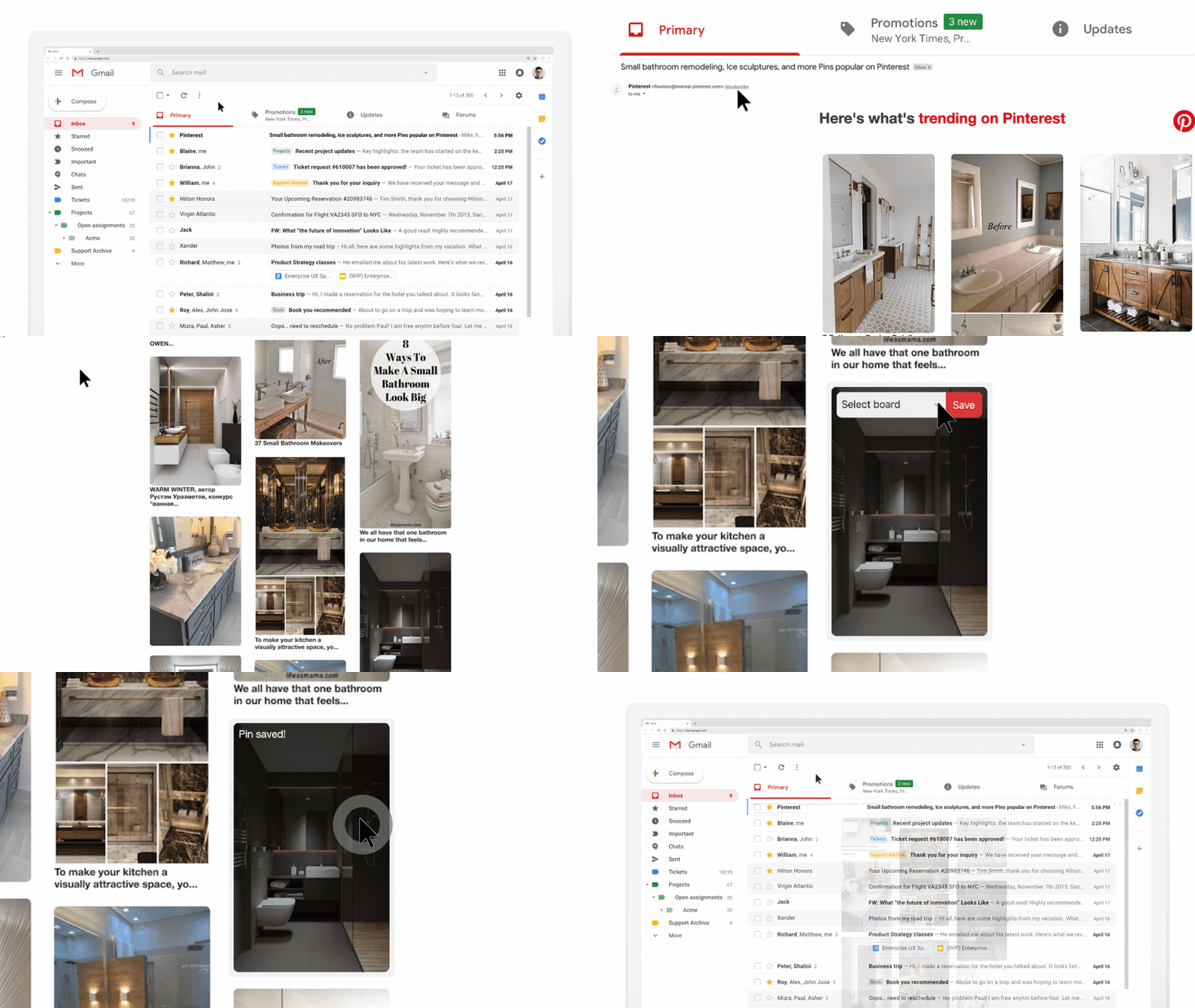
As an example, Google shows the Pinterest newsletter:
Source: medium.com
As can be seen in the example above, the user can view recommended content from Pinterest directly in Gmail and also pin it to their board.
Emails are becoming more interactive and therefore allow for even more effective and engaging communication with the customer. As in the example mentioned above, we can tailor content according to our recipient’s preferences that will interest and inspire them to take action – in this case, to pin a graphic to their Pinterest board.
Here are selected examples of how this new technology can be adapted to email.

As an example of the use of AMP, we can point out websites such as Booking.com which allow the addition of booked hotels and travel dates to Google Calendar. The relevant components will enable us to set up a reminder to ensure that we do not miss an appointment. All of this can be done in a few clicks directly from the email.
Source: mobirank.pl
Suppose, for example, that someone wants to schedule a meeting with you, but can’t see your calendar, so sends an email to find out the dates and times you are available. In the email, there is a form to coordinate the details. With AMP for email, you can respond interactively through the form, without having to click a link and be redirected to another page.
AMP for email can also help you do more in less time, allowing you to quickly attend events, view and interact with auctions and campaigns or complete a survey without leaving your mailbox.
Email phishing, which has been popular in recent years, can, unfortunately, be a barrier to taking full advantage of the technology in the mailbox. Gmail will require companies to have a good reputation and authenticate senders with SPF, DKIM, and DMARC. However, will this be enough?
We see a lot of potential in this technology, but its use and value will be able to be verified by time and successive tests.
Do you have questions? Contact our BOK.

We are a group of specialists involved in developing substantive and engaging articles on emails and their deliverability. Our value is to be part of the team that creates the EmailLabs service on a daily basis, making our content fully responsive to our audience's questions and problems. Do you have any questions? We look forward to hearing from you :)
See more articles
We live in a world where your customers switch seamlessly between laptops, smartphones, and tablets. They navigate a complex digital ecosystem – checking emails, using mobile apps, and reacting...

We are delighted to announce that Vercom S.A., the company behind the EmailLabs project, has successfully completed the ISO 22301 certification process. This significant achievement underscores our commitment to...

EmailLabs, as part of the Vercom group, proudly announces its full commitment to aligning its ICT services with the latest cybersecurity standards. In response to dynamically changing regulations, the...
We are pleased to announce that MessageFlow, a product from the Vercom S.A. group, has received the prestigious CSA (Certified Senders Alliance) Certification. This recognition not only underscores the...
Modern email systems no longer treat the primary inbox as the default destination for every message. The final classification of an email is the result of a multistage evaluation...
Best practices, Maile marketingowe, Marketing E-mails, Transactional Emails
Mass email sending is a critical strategy for business owners, marketers, developers, and nonprofit managers looking to scale their outreach. Whether you are announcing a new product feature, distributing...
Best practices, Marketing E-mails
Customer feedback is the fuel for business growth, but gathering it effectively requires more than just a list of questions. Email surveys remain the most direct channel for understanding...
Modern email systems no longer treat the primary inbox as the default destination for every message. The final classification of an email is the result of a multistage evaluation...
Best practices, Maile marketingowe, Marketing E-mails, Transactional Emails
Mass email sending is a critical strategy for business owners, marketers, developers, and nonprofit managers looking to scale their outreach. Whether you are announcing a new product feature, distributing...
Best practices, Marketing E-mails
Customer feedback is the fuel for business growth, but gathering it effectively requires more than just a list of questions. Email surveys remain the most direct channel for understanding...
Best practices, Email Marketing, Pytania i odpowiedzi
Mail merge combines a template document with data to create personalized communications. This technique saves time by automatically generating individualized letters, emails, and labels without manual entry. What Is...
IT & Tech, Pytania i odpowiedzi, Technical
When an email travels from sender to recipient, it passes through several critical components of email infrastructure. At the heart of this journey sits the Mail Transfer Agent (MTA)...
Best practices, Deliverability, Google and Yahoo's Requirements, Pytania i odpowiedzi
The world of email marketing is constantly evolving, and leading mail service providers – Gmail, Yahoo, Microsoft, and Apple – regularly update their guidelines for senders. In recent years,...
Gmail, Google and Yahoo's Requirements
You might have noticed a new item in your Gmail sidebar recently – the “Manage subscriptions” tab, often flagged with a blue notification dot. While Google announced this feature...
IT & Tech, Pytania i odpowiedzi, Technical
Efficient email communication isn’t just about sending messages — it also involves integrating email functionality into your business systems and applications. Email APIs (Application Programming Interfaces) serve as the...
One of the most important yet often underestimated elements in shaping a company’s brand perception is the transactional email. In e-commerce, the design of such messages must be carefully...


