
Best practices, Email Marketing
Best practices, Email Marketing
Every marketer knows that the quality of your email list directly impacts your overall marketing effectiveness. Yet, many organizations neglect this critical aspect, focusing instead on growing their subscriber count.
Let’s take a closer look at the hygiene essentials in the email list and how to implement effective scrubbing techniques.
Email list hygiene refers to the process of regularly cleaning your email list to remove inactive subscribers, invalid email addresses, and other problematic contacts. Much like personal hygiene, email list hygiene is not a one-time task but an ongoing process that requires consistent attention. It involves identifying and removing or updating problematic email addresses to maintain a clean, responsive subscriber list.
A clean email list ensures that your marketing messages reach real people who are genuinely interested in your content, products, or services. It’s about quality over quantity – having a smaller list of engaged subscribers is far more valuable than a large list filled with inactive or invalid contacts.
Knowing the common issues that affect email lists is the first step toward effective list hygiene:
These dormant contacts not only distort your engagement metrics but can also harm your sender reputation if left unchecked. Inactive subscribers are contacts who haven’t opened or clicked on your emails for an extended period.
Reasons for inactivity include:
Each invalid address in your list represents a potential hard bounce, which can damage your sender reputation if they accumulate. A “hard bounce” signifies a permanent delivery failure, usually because the email address is non-existent or invalid. This differs from a “soft bounce,” which is a temporary issue like a full recipient inbox or a server being temporarily unavailable. While soft bounces can sometimes resolve themselves, consistent soft bounces to an address may also indicate it’s no longer in use. Invalid email addresses enter your list in several ways:
Soft Bounces vs Hard Bounces — What’s the Difference?
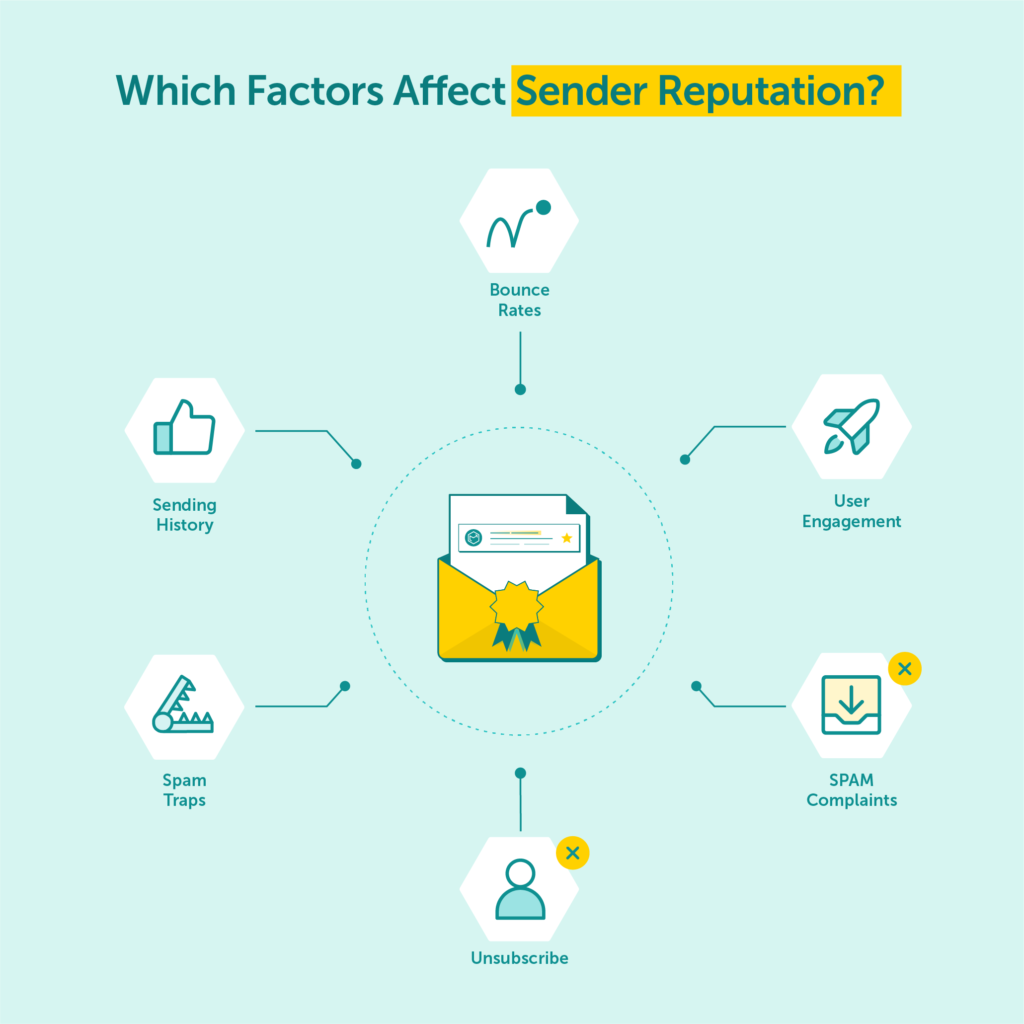
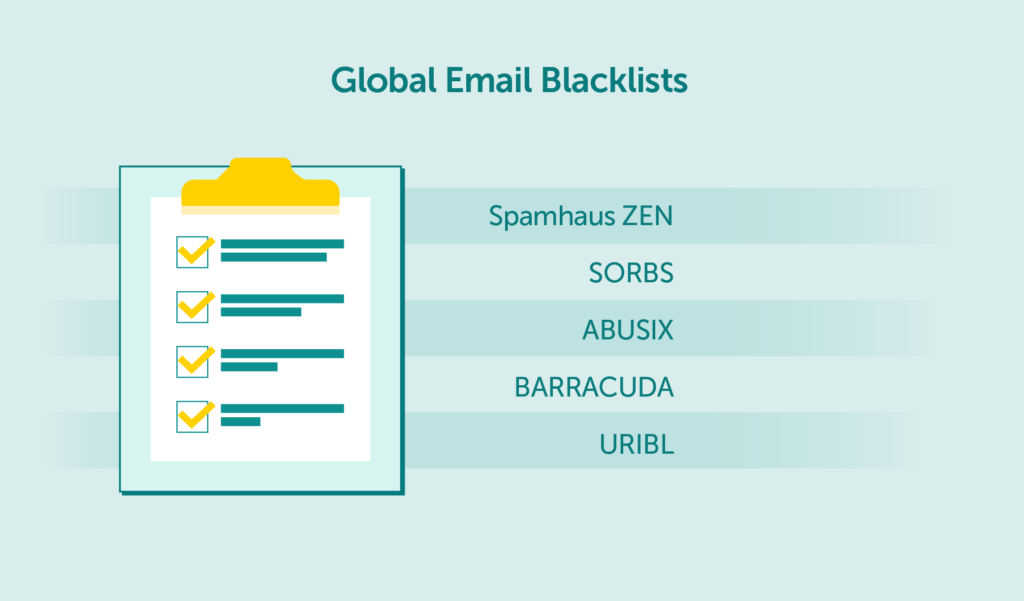
Getting caught in a spam trap can severely damage your sender reputation and potentially get your domain blacklisted. Types of spam traps include:
The presence of spam traps often indicates poor list acquisition practices or inadequate maintenance.
Implementing proper email list hygiene requires a systematic approach and consistent effort. Beyond periodic “scrubbing”, hygiene should be an integral part of your daily email operations.
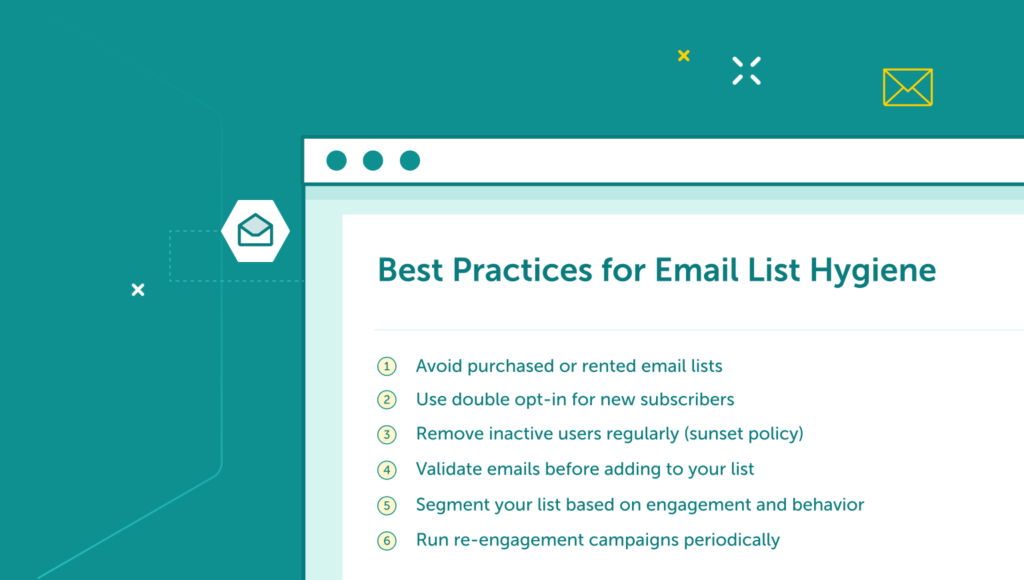
A critical first step in list hygiene is how you acquire addresses. Never purchase or rent email lists. These lists are almost always of poor quality, filled with outdated addresses, spam traps, unconsented contacts, and individuals who have no interest in your brand. Using such lists will severely damage your sender reputation, lead to high bounce rates, trigger spam complaints, and potentially result in your domain or IPs being blacklisted, undermining all other hygiene efforts. Building your list organically through confirmed opt-ins is the only sustainable and ethical approach.
Maximize your email deliverability and security with EmailLabs!
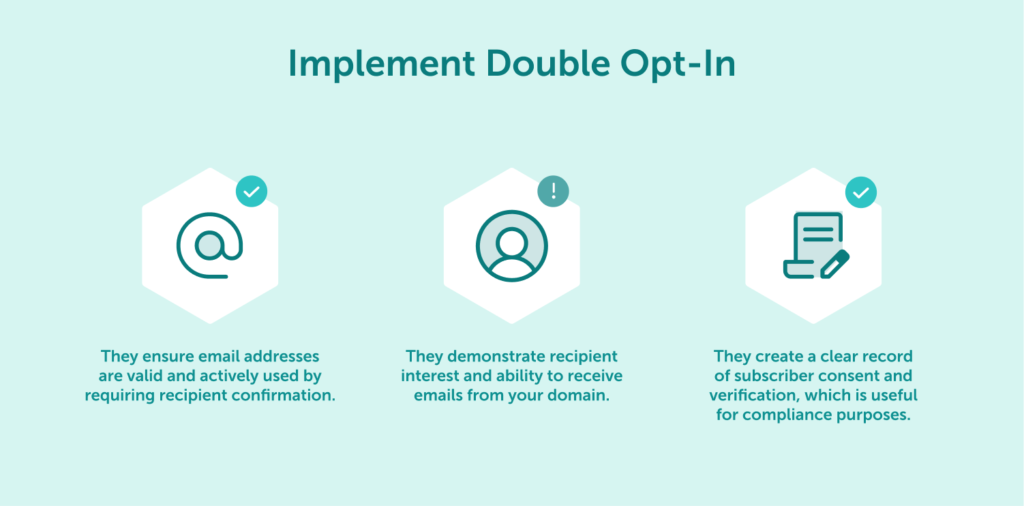
This process requires new subscribers to confirm their email address by clicking a link in a verification email, ensuring both the validity of the address and the user’s interest. Double opt-in verification serves as your first line of defense against invalid addresses and helps comply with data privacy regulations like GDPR by providing clear proof of consent.
Benefits of double opt-in:
Always follow up with a welcome email that sets expectations about what the subscriber will receive.
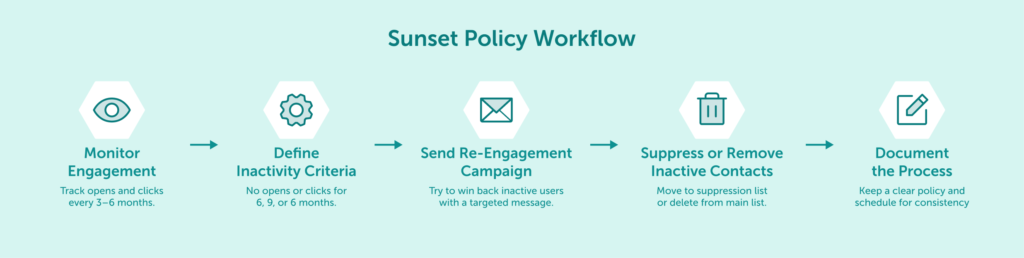
Implementing a “sunset policy” involves defining a process for how you handle subscribers who stop engaging with your emails. A good rule of thumb is to review engagement patterns every three to six months. Create a schedule for identifying and removing inactive subscribers by:
These specialized tools verify the validity of email addresses in your database, identifying potential issues like syntax errors, fake domains, and disposable email addresses. Email validation tools streamline the maintenance process by:
Many validation services integrate with email providers to automatically validate addresses upon entry.
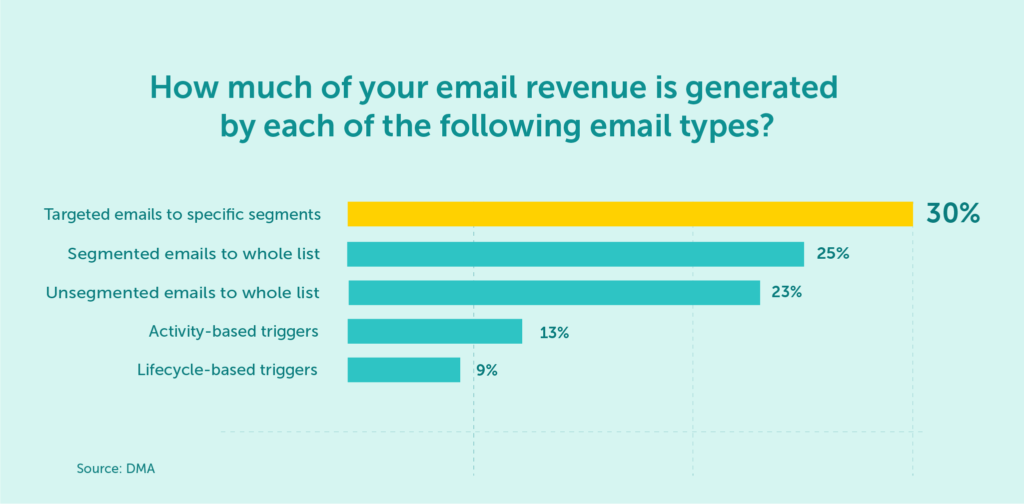
By dividing your list into smaller, more targeted groups based on engagement levels, interests, and other factors, you can send more personalized content to each segment. Segmentation helps with list hygiene by:
Before removing inactive subscribers, try to reignite their interest through re-engagement campaigns. Well-crafted re-engagement emails can recover a significant portion of inactive subscribers. Effective campaigns include:
For subscribers who don’t respond after a reasonable period, removal is the best course of action.
The effort invested in email list hygiene yields significant returns:
Clean lists with engaged subscribers experience fewer bounces and spam complaints, leading to more of your emails successfully reaching the inbox. Email service providers monitor sender behavior, and maintaining a clean list signals that you’re a legitimate sender.
Benefits include:
With inactive and invalid addresses removed, your engagement metrics naturally improve. Open rates, click-through rates, and conversion rates all tend to increase when your emails are reaching an audience of interested, active subscribers.
Clean lists provide:
Every major email service provider tracks sender behavior to determine whether emails should be delivered to the inbox, filtered to spam, or blocked entirely. A clean list positively impacts key reputation metrics:
EmailLabs provides a comprehensive infrastructure that supports effective email list management while ensuring optimal deliverability for both transactional and marketing emails.
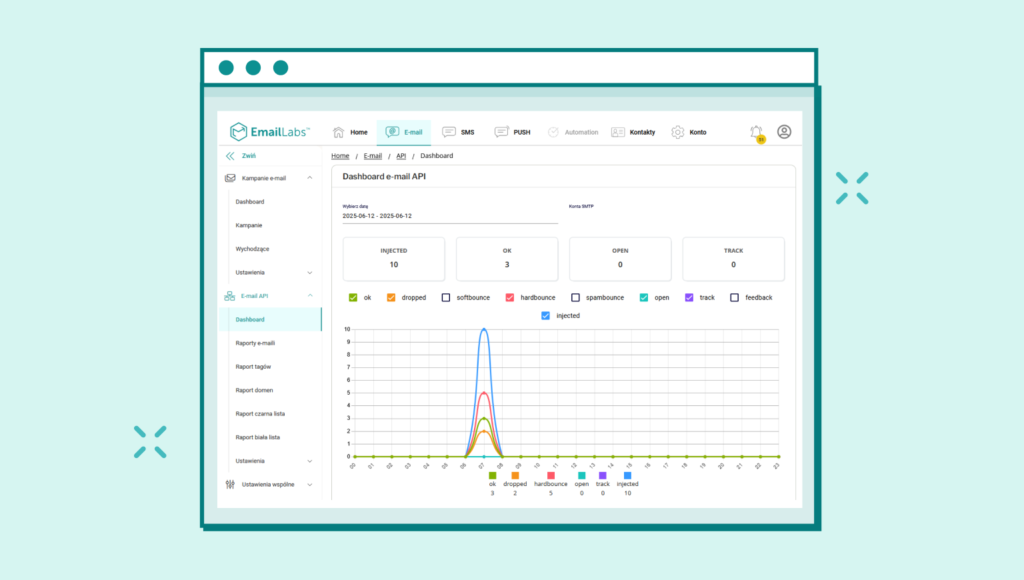
Our platform offers advanced analytics that allows you to monitor engagement in real-time, helping you identify inactive subscribers before they impact your sender reputation. With detailed message logs, you can track exactly what happens with every email you send. Furthermore, EmailLabs incorporates proactive hygiene measures:
EmailLabs’ dedicated servers and IP addresses can help protect your sender reputation from the influence of other senders and give you more control, but maintaining good list hygiene practices on your end remains crucial for achieving optimal deliverability even with a dedicated IP.
With EmailLabs, you’re gaining a partner with deep expertise in email deliverability across European markets, including specialized knowledge of local provider requirements that many global ESPs lack.
Email list hygiene is essential for successful email marketing. By regularly cleaning your list, you ensure that your messages reach engaged subscribers while protecting your sender reputation and optimizing your budget. Remember that a smaller list of engaged subscribers is far more valuable than a large list filled with inactive addresses.
Start reviewing your email list hygiene practices today, and consider how EmailLabs can help optimize your email delivery infrastructure to maximize the effectiveness of your email marketing program!

We are a group of specialists involved in developing substantive and engaging articles on emails and their deliverability. Our value is to be part of the team that creates the EmailLabs service on a daily basis, making our content fully responsive to our audience's questions and problems. Do you have any questions? We look forward to hearing from you :)
See more articles
We live in a world where your customers switch seamlessly between laptops, smartphones, and tablets. They navigate a complex digital ecosystem – checking emails, using mobile apps, and reacting...

We are delighted to announce that Vercom S.A., the company behind the EmailLabs project, has successfully completed the ISO 22301 certification process. This significant achievement underscores our commitment to...

EmailLabs, as part of the Vercom group, proudly announces its full commitment to aligning its ICT services with the latest cybersecurity standards. In response to dynamically changing regulations, the...
We are pleased to announce that MessageFlow, a product from the Vercom S.A. group, has received the prestigious CSA (Certified Senders Alliance) Certification. This recognition not only underscores the...
Modern email systems no longer treat the primary inbox as the default destination for every message. The final classification of an email is the result of a multistage evaluation...
Best practices, Maile marketingowe, Marketing E-mails, Transactional Emails
Mass email sending is a critical strategy for business owners, marketers, developers, and nonprofit managers looking to scale their outreach. Whether you are announcing a new product feature, distributing...

Best practices, Marketing E-mails
Customer feedback is the fuel for business growth, but gathering it effectively requires more than just a list of questions. Email surveys remain the most direct channel for understanding...
Modern email systems no longer treat the primary inbox as the default destination for every message. The final classification of an email is the result of a multistage evaluation...
Best practices, Maile marketingowe, Marketing E-mails, Transactional Emails
Mass email sending is a critical strategy for business owners, marketers, developers, and nonprofit managers looking to scale their outreach. Whether you are announcing a new product feature, distributing...
Best practices, Marketing E-mails
Customer feedback is the fuel for business growth, but gathering it effectively requires more than just a list of questions. Email surveys remain the most direct channel for understanding...
Best practices, Email Marketing, Pytania i odpowiedzi
Mail merge combines a template document with data to create personalized communications. This technique saves time by automatically generating individualized letters, emails, and labels without manual entry. What Is...
IT & Tech, Pytania i odpowiedzi, Technical
When an email travels from sender to recipient, it passes through several critical components of email infrastructure. At the heart of this journey sits the Mail Transfer Agent (MTA)...
Best practices, Deliverability, Google and Yahoo's Requirements, Pytania i odpowiedzi
The world of email marketing is constantly evolving, and leading mail service providers – Gmail, Yahoo, Microsoft, and Apple – regularly update their guidelines for senders. In recent years,...
Gmail, Google and Yahoo's Requirements
You might have noticed a new item in your Gmail sidebar recently – the “Manage subscriptions” tab, often flagged with a blue notification dot. While Google announced this feature...
IT & Tech, Pytania i odpowiedzi, Technical
Efficient email communication isn’t just about sending messages — it also involves integrating email functionality into your business systems and applications. Email APIs (Application Programming Interfaces) serve as the...

One of the most important yet often underestimated elements in shaping a company’s brand perception is the transactional email. In e-commerce, the design of such messages must be carefully...

