
Modern email systems no longer treat the primary inbox as the default destination for every message. The final classification of an email is the result of a multistage evaluation conducted by filtering systems.
Within email marketing dashboards, the situation often appears ideal: a 99% delivery rate and the absence of hard bounces suggest a technical success. Despite this, a brand may remain invisible to a significant portion of its audience, making this metric a classic vanity metric.
C-Level TL;DR: Strategic Takeaways
ESP dashboards can report success even while emails systematically bypass recipient awareness. This discrepancy stems from relying on Phantom Metrics, which mask a lack of real visibility and declining revenue from the email channel.
This category includes two primary phenomena:
These metrics systematically hide the greatest threat in modern email marketing: Silent Engagement Decay. This is a process of slow erosion in a sender’s ability to reach the Primary Inbox.
Unlike issues signaled by 5xx errors or spam complaints, this decay occurs without any negative feedback signals. Mail providers like Gmail or Outlook do not send notifications regarding visibility degradation.
Emails are technically delivered but are steadily pushed down the attention hierarchy: from the primary inbox to promotions, from promotions to spam, and finally to silent rejection at the SMTP protocol level.
Consequently, this phenomenon should be treated as a fundamental problem of revenue infrastructure rather than a standard discrepancy in marketing metrics.

In ESP systems, the “Delivered” status only confirms that the receiving server accepted the message. ISPs do not provide information on which tab the email landed in or if it appeared in the inbox at all. Today, classification is driven by the behavior of each specific recipient:
Regaining real control over the email channel requires designing communication for sorting algorithms and behavioral analysis.
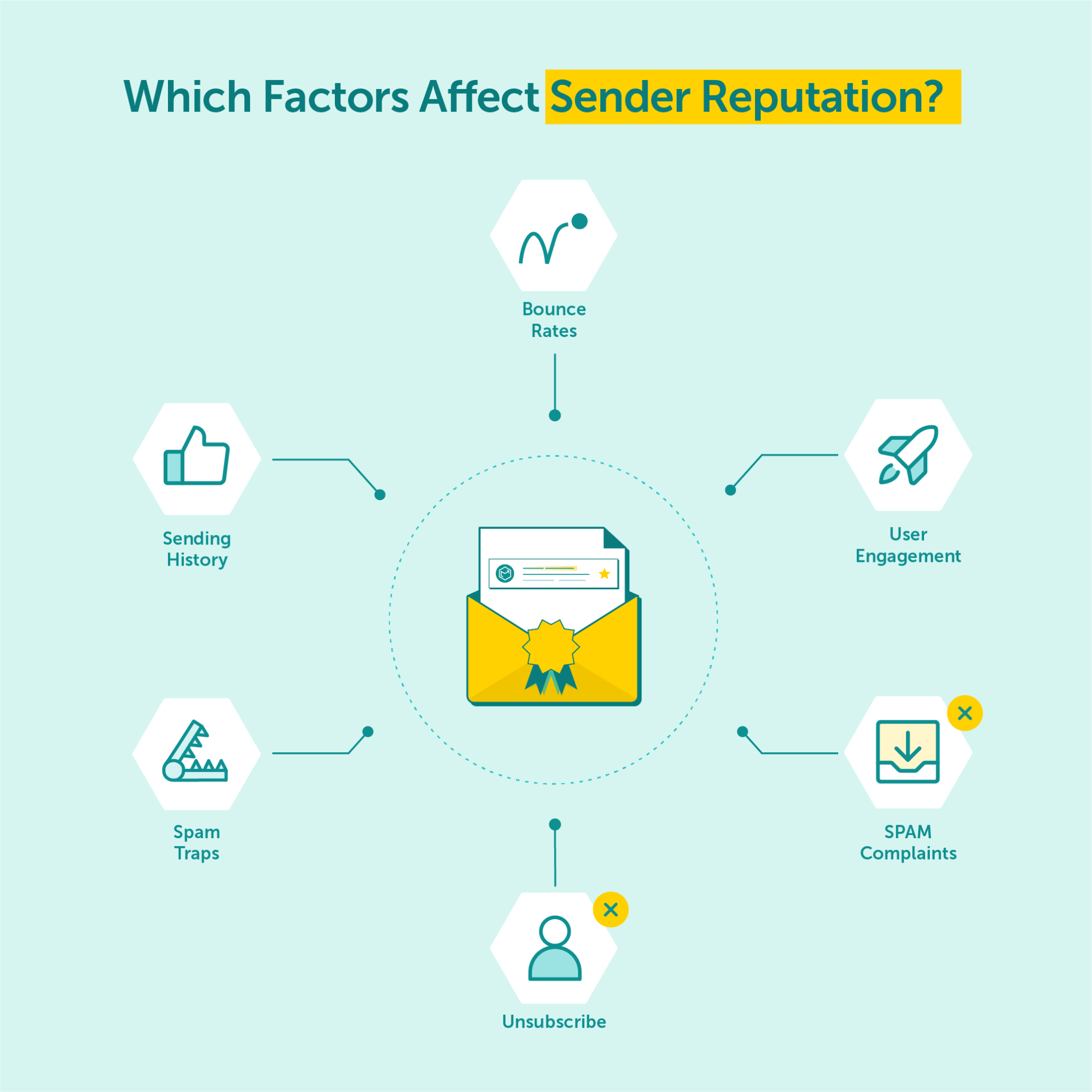
This is the absolute foundation of email visibility. In 2026, technical authentication has moved beyond being a “best practice” to becoming a strict operational requirement. Deliverability evaluation now relies on a multidimensional reputation scoring system.
The sending infrastructure is analyzed based on multiple signals (from authentication correctness to sending history and user behavior). In cases of severe standard violations (e.g., lack of authentication or a high level of complaints), email traffic may be restricted or rejected during the initial verification stage.
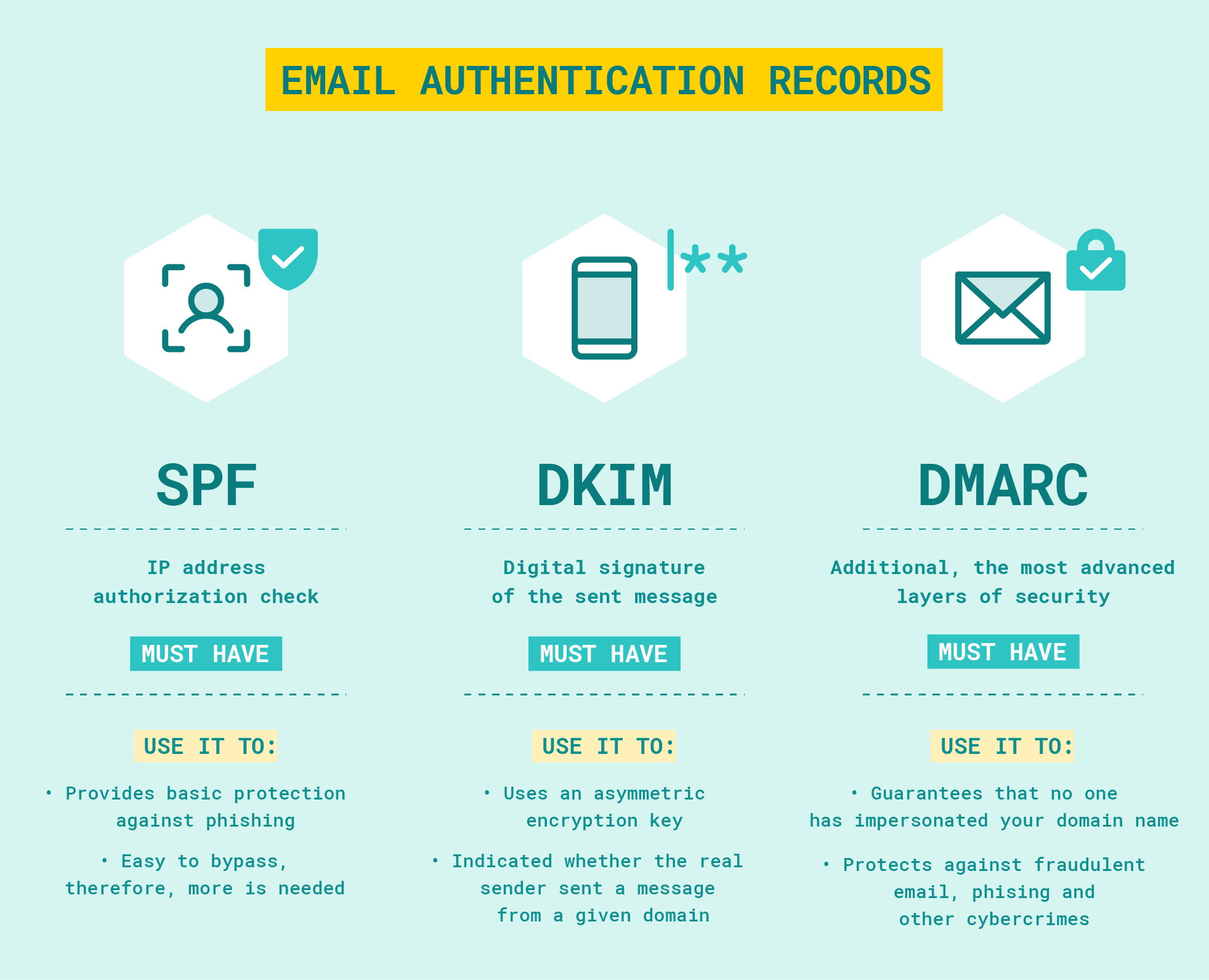
The bedrock of this layer is the complete and consistent configuration of SPF and DKIM protocols, alongside the implementation of a restrictive DMARC policy (in accordance with RFC 7489 documentation). Ensuring full compliance with key mailbox provider requirements (such as Google), including proper sender authorization, is the absolute technical minimum.
A lack of Domain Alignment between the visible sender domain and the DKIM signature is interpreted by filters as a brand spoofing attempt and, in practice, can lead to the rejection of the message or its classification as spam.
Campaign design does not begin solely with the creative. It is equally important to understand how filtering and classification systems analyze email messages before they are displayed in the inbox.
Machine learning models analyze message content, reputation signals, and recipient context to determine its category and priority within the inbox. If the system cannot quickly and unambiguously interpret what the message is about and its informational value, the communication may be classified as less important or routed to a less prominent tab.
Algorithms analyzing email utilize various signals, from sender reputation and sending patterns to the characteristics of the message itself. One of the important elements of this analysis is textual content, which allows systems to better understand the context of the communication.
If the key offer is hidden exclusively within an image or under an ambiguous headline, the system has a limited ability to correctly interpret the message content. Consequently, it becomes more difficult to unambiguously determine the context of the communication, its subject, and its potential value to the recipient.
In an environment increasingly supported by AI systems, delivering information in a format that can be unambiguously processed by algorithms is growing in importance.
Therefore, structured data based on Schema.org (such as Discount Offer or ParcelDelivery tags) is playing an increasingly vital role. For mailbox providers, these serve as a clear signal indicating specific offer elements, such as a discount, promotional code, or expiration date.
Within the Gmail environment, structured data embedded in the message content can be used to generate so-called Deal Cards. These are visual elements presenting offer details (such as the discount percentage, promotional code, or a link to the promotion page) without requiring the recipient to fully open the email.
Note: Deal Cards are displayed exclusively within the “Promotions” tab in the Gmail app, not in all versions of the client or in the Primary Inbox. For this reason, it is worth designing content precisely for visibility within this specific context.

In this layer, the final decision is made, and mailbox providers base it largely on negative user signals. One of the strongest signals is a behavior that is often ignored in traditional campaign analysis. The phenomenon of Delete Without Opening (deleting a message without opening it, based solely on the subject line and sender) is interpreted by filtering algorithms as an active rejection of communication.
This applies particularly to mechanisms like SmartScreen operating within the Outlook environment, following Microsoft’s latest requirements. This is not seen as neutral disinterest but as a clear signal of low message value. The system treats this behavior as a strong negative indicator of the quality of the sent correspondence.
At scale, this can significantly lower the sender’s reputation and increase the risk of the message being classified as spam.
The situation is further complicated by the Graymail phenomenon. These are messages for which the recipient has formally given consent (for example, through a newsletter sign-up) but consistently ignores.
The user does not open or click them, yet they also do not unsubscribe or report them as spam.
For filtering algorithms, this chronic lack of interaction serves as a strong negative behavioral signal (chronic non-engagement scoring).
At scale, it acts as a reputational anchor: a high volume of inactive recipients lowers the scoring for the entire sending infrastructure. In practice, Graymail is one of the fastest mechanisms for the silent degradation of visibility. It generates no alerts or technical errors but systematically shifts communication down the inbox hierarchy.
Yahoo (along with AOL) operates within this same layer. This platform consistently executes a Community Feedback philosophy. Unlike Google’s analytics, direct spam complaints hold the highest priority here, and the algorithm approaches any authentication errors or deviations from database quality standards with extreme rigor.
Yahoo has aligned its technical requirements with market giants by introducing rigid thresholds. This forces senders to closely and regularly monitor domain reputation through dedicated analytics panels, such as the Yahoo Sender Hub.
Consequently, within this environment, direct user complaints remain one of the most critical reputational signals.
Only a few years ago, a low domain reputation primarily meant a higher risk of landing in the spam folder. In 2026, this model has officially become obsolete. Reputation evaluation criteria, particularly for bulk senders, have undergone a radical tightening.
Although infrastructure reputation still operates across a spectrum and depends on behavioral signals, tolerance for deviations has practically disappeared.
Severe violations of authentication standards or sending quality increasingly result in the total rejection of traffic at the initial SMTP verification stage, before the message ever reaches content filtering systems.
One of the most uncompromising changes is the approach to the Spam Complaint Rate. According to official Google guidelines for bulk senders and Yahoo best practices, a level of 0.3% represents a hard tolerance limit. The recommended safety threshold is significantly lower, ideally around 0.1%.
Mailbox provider systems (ISPs) analyze reputation across multiple dimensions; however, maintaining complaint rates above these values, even without sudden spikes, drastically increases the risk of immediate operational consequences.
In practice, this means SMTP rejections (5xx series errors) or aggressive throttling, which blocks the mailing before the actual content evaluation occurs.
For the sender, the effect is always the same. A sudden block appears, which is not an initial warning signal but the consequence of a long period of silent engagement decay previously ignored in analytical reports.
Beneath the behavioral layer lies the truth about data quality. Monitoring organizations such as Spamhaus, along with mailbox providers, utilize spam traps as tools to identify low-reputation senders. Hitting such a trap is a strong signal of poor database quality and can significantly degrade the reputation of the sending domain. Anti-spam algorithms utilize three main categories of addresses to block mailings:
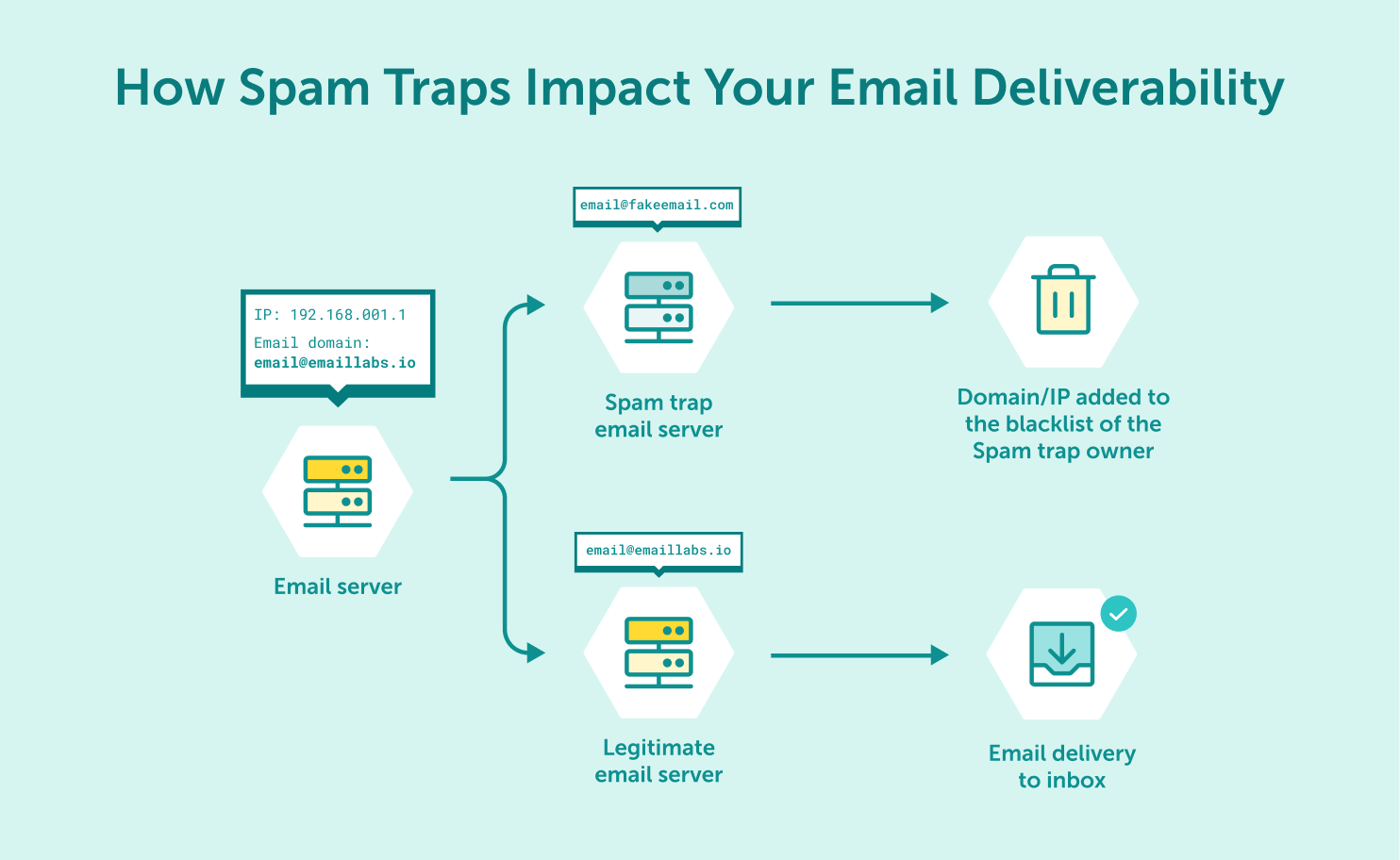
The common denominator of these issues is a lack of data quality engineering. In the current environment, maintaining mailing list hygiene requires proactive monitoring, automated validation at sign-up, and the rigorous removal of contacts that generate infrastructure errors.
Recovering credibility after silent engagement decay is not a quick fix but an engineering process. It requires rigorous procedures:
The traditional practice of retaining inactive contacts for 12 months is no longer viable. Automatic sunsetting of contacts without engagement signals (e.g., no interaction for 90 to 180 days) is strictly required. This approach aligns with industry best practices (including M3AAWG guidelines), utilizing a limited win-back campaign merely as a transitional stage.

Traditional reliance on the Inbox Placement Rate (IPR) measured via seed lists has become an analytical trap. Artificial intelligence algorithms base their classification on the unique behavior of each user. This means an artificial test mailbox will always generate a distorted picture. A message classified as “Primary” in a test environment may simultaneously land in spam for a real, unengaged subscriber.
ESP systems precisely report the Delivery Rate, which is the technical acceptance of the message by the receiving server. Therefore, a percentage drop in deliverability is not the primary alarm signal. The critical signal for sender reputation is an anomaly where the “Delivered” status remains stable while open and interaction rates show a persistent downward trend. In such a scenario, the domain must be treated as if it were entirely new. An effective recovery procedure includes:
The goal of the warming process is not to build volume. Instead, it is to provide evaluating systems with high-quality behavioral signals. These signals serve as the ultimate proof for AI models that the sending infrastructure has regained its credibility.
The Primary Inbox has definitively ceased to be an open market for attention. Currently, it is a strictly protected zone where advanced filtering systems based on machine learning restrict the visibility of communication deemed of low value to the user. Access to this space is no longer a right. It is a privilege that requires constant validation of the sender’s credibility through real recipient engagement.
The mailing list has stopped functioning as a resource used solely to maximize sending volume. It has become a relationship requiring continuous maintenance and the active implementation of Trust Engineering principles. Brands ignoring this paradigm shift will observe a systematic degradation in visibility, even with seemingly ideal delivery rates at the infrastructure level.
The first symptoms of Phantom Deliverability are a signal for immediate action. In professional email marketing, relying on shared IP addresses for bulk mailings represents a massive reputational technical debt.
Without a dedicated IP and comprehensive SMTP logs, you cannot distinguish between reputation degradation based on behavioral algorithms and issues within the content itself. In practice, this means you are operating in the dark, with visibility drops hidden behind seemingly positive reports.

The EmailLabs infrastructure is designed to support senders in the fight against silent engagement decay:
A professional sending infrastructure cannot guarantee the success of a poor campaign. However, without it, stable deliverability in the AI era simply does not exist.
No. The delivery rate solely indicates that the recipient’s server technically accepted the message. It provides no information regarding where the email ultimately landed (the primary inbox, the Promotions tab, or the Spam folder), nor does it indicate if it was deprioritized by AI algorithms.
In practice, this means a sender can report 99% infrastructural deliverability while simultaneously remaining invisible to real users. The phenomenon of Phantom Deliverability originates precisely within this gap between “delivered” and “seen.”
Inbox placement describes the actual visibility of an email within the user interface, specifically whether the communication reached the Primary Inbox. In the 2026 email architecture, these represent two entirely distinct evaluation layers. It is crucial to note that traditional inbox placement testing using seed lists can be an analytical trap.
Because AI algorithms base classification on the unique behavior of each user, a message classified as “Primary” on a test account can simultaneously land in spam for a real, unengaged subscriber. Today, a high delivery rate does not automatically equate to high inbox placement, and these metrics must not be conflated.
Visibility is no longer determined by infrastructure alone. Gmail and Outlook utilize advanced behavioral algorithms and AI models that analyze user interaction history, content context, and sender domain reputation.
A technically verified email may be automatically hidden if the system deems it irrelevant or perceives it as information noise. For AI algorithms, a lack of engagement is a signal as significant as a spam complaint.
According to official Google and Yahoo guidelines, a safe spam complaint rate is below 0.1%. A value of 0.3% is treated as the absolute limit of tolerance for bulk senders.
Regularly exceeding these thresholds leads to a rapid decline in domain reputation. This can result in immediate restrictions from receiving servers, including SMTP rejections (5xx errors) or a permanent decrease in inbox placement.
In this scenario, the issue lies in behavioral signals rather than infrastructure. The recovery process requires implementing radical data hygiene (Sunset Policy), precise segmentation based on actual recipient activity, and a temporary restriction on sending volume. Simultaneously, content optimization for AI algorithms is necessary.
This includes a clear message structure, readable value summaries, and the implementation of structured data (Schema.org). In the current environment, inbox placement is primarily a derivative of recipient intent and behavior, rather than mere technical correctness.
Silent Engagement Decay is the process of gradually losing email visibility due to a chronic lack of recipient engagement. This phenomenon occurs without generating technical errors, alerts, or notifications from mailbox providers.
Algorithms systematically lower the priority of such messages within the user interface, even though everything appears correct at the infrastructure level. It stands as one of the most insidious problems in modern deliverability.
Graymail encompasses communication for which the recipient has formally given consent but consistently shows no interaction: messages are not opened, links are not clicked, and list unsubscribes do not occur.
For modern mail algorithms, this represents a strong negative behavioral signal. Processing large volumes of Graymail lowers domain reputation and restricts inbox placement for the entire database, including the most valuable subscribers.
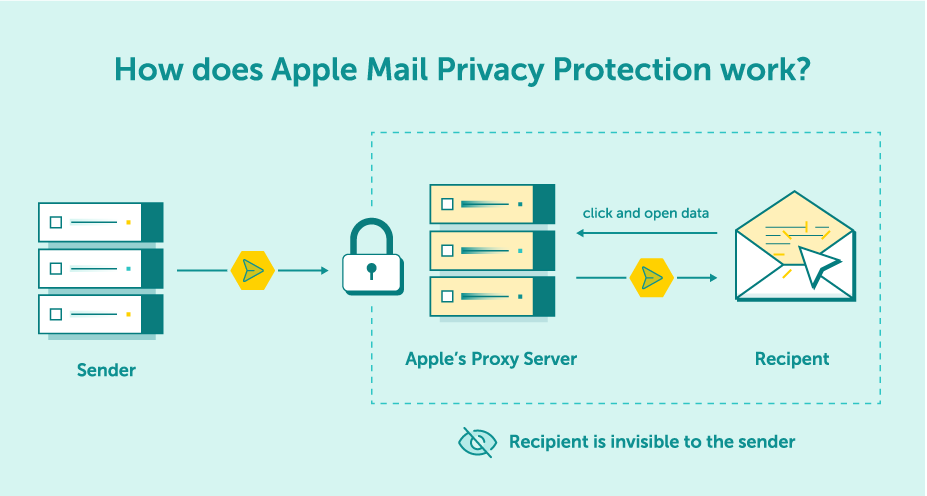
Yes, and in a fundamental way. Apple Mail Privacy Protection automatically pre-fetches images in the background on intermediary servers, regardless of actual user interest.
As a result, the open rate is artificially inflated, generating the phenomenon known as Phantom Engagement. Consequently, the open rate has ceased to be a reliable measure of actual recipient interest and should not be treated as a primary KPI.
Machine learning based algorithms analyze not just keywords but also content structure, readability, and semantic context. If the system cannot unambiguously identify the value of the communication for the end recipient, the email is deprioritized or hidden entirely. For AI, it matters not only what is sent but how clearly it is communicated.
The recovery procedure for sending infrastructure (referred to as Trust Engineering) typically lasts from several weeks to several months. It requires rigorous segmentation of active recipients, a temporary restriction on sending volume, and a controlled warm-up process for the domain and IP addresses.
Success is determined by positive behavioral signals generated by real users. Without them, even the most optimally configured infrastructure will not regain stable inbox placement.

Product and Technical Insights Specialist
Natalia abandoned her career as an experimental biologist for the digital universe and new technologies. She likes to know something about everything and everything about something. Breathlessly follows and describes news from the email world. Supports EmailLabs users in integrating, analyzing, and reporting deliverability. Helps to increase domain security with implemented DNS records and BIMI standard, moreover educates on good mailing practices.
See more articles
We live in a world where your customers switch seamlessly between laptops, smartphones, and tablets. They navigate a complex digital ecosystem – checking emails, using mobile apps, and reacting...

We are delighted to announce that Vercom S.A., the company behind the EmailLabs project, has successfully completed the ISO 22301 certification process. This significant achievement underscores our commitment to...

EmailLabs, as part of the Vercom group, proudly announces its full commitment to aligning its ICT services with the latest cybersecurity standards. In response to dynamically changing regulations, the...
We are pleased to announce that MessageFlow, a product from the Vercom S.A. group, has received the prestigious CSA (Certified Senders Alliance) Certification. This recognition not only underscores the...
Compliance & Security, Email Marketing, Security
TL;DR DMARCbis is now official: After years of work by the IETF working group, the DMARC specification has been formally updated. Three new documents, RFC 9989, RFC 9990, and...

Email Marketing, Gmail, New feature
TL;DR Gmail Live: a new feature enabling natural language voice search in the inbox, powered by the Gemini model. AI Inbox and AI Overviews: a revamped inbox interface featuring...
Best practices, Best practices, Email Authentication
TL;DR: Strategic Takeaways for C-Level and Marketing Leaders DKIM2 is not a minor DNS configuration update. It is a systemic response to two critical business problems: Replay attacks: scenarios...
Compliance & Security, Email Marketing, Security
TL;DR DMARCbis is now official: After years of work by the IETF working group, the DMARC specification has been formally updated. Three new documents, RFC 9989, RFC 9990, and...
Email Marketing, Gmail, New feature
TL;DR Gmail Live: a new feature enabling natural language voice search in the inbox, powered by the Gemini model. AI Inbox and AI Overviews: a revamped inbox interface featuring...
Best practices, Best practices, Email Authentication
TL;DR: Strategic Takeaways for C-Level and Marketing Leaders DKIM2 is not a minor DNS configuration update. It is a systemic response to two critical business problems: Replay attacks: scenarios...
AI, Antispam, Best practices, Deliverability
C-Level TL;DR: Strategic Takeaways Recipient consent as a foundation (Item 0): Sending email messages without explicit recipient consent (opt-in) poses a significant risk to your sending infrastructure. Attempting to...
AI, Antispam, Best practices, Deliverability
Executive TL;DR: Strategic Takeaways Deliverability Schism: The growing divide between sales automation technologies and the security standards enforced by major global mailbox providers (collectively referred to as MAGY) is...

Modern email systems no longer treat the primary inbox as the default destination for every message. The final classification of an email is the result of a multistage evaluation...
Best practices, Maile marketingowe, Marketing E-mails, Transactional Emails
Mass email sending is a critical strategy for business owners, marketers, developers, and nonprofit managers looking to scale their outreach. Whether you are announcing a new product feature, distributing...

Best practices, Marketing E-mails
Customer feedback is the fuel for business growth, but gathering it effectively requires more than just a list of questions. Survey emails remain the most direct channel for understanding...

Best practices, Email Marketing, Pytania i odpowiedzi
Mail merge combines a template document with data to create personalized communications. This technique saves time by automatically generating individualized letters, emails, and labels without manual entry. What Is...
