
Google and Yahoo's Requirements, Yahoogle
Google and Yahoo's Requirements, Yahoogle
2024 brought fundamental changes to email marketing, introducing new, stringent requirements for senders. Since February 1, 2024, Google and Yahoo have started enforcing new deliverability rules, primarily targeting bulk senders (those sending more than 5,000 messages per day). Key requirements include mandatory authentication (SPF, DKIM, DMARC), maintaining a spam complaint rate below 0.3%, and easy unsubscribing via one-click mechanisms.
Microsoft has also joined this group, introducing its own requirements for sending messages to Outlook, Hotmail, and Office 365 users – including mandatory domain authorization and limits on the number of messages from a single domain and IP.
Complying with these policies has become a prerequisite for successfully reaching inboxes across the entire ecosystem of major mailbox providers.
You can read more about the specific policies of each provider in our articles:
Managing sender reputation and inbox placement without accurate data is challenging. To maintain a high sender reputation and ensure that crucial messages land in the inbox, you need precise metrics. Google, with its Postmaster Tools, has long set the standard. Yahoo recognized this need and took a major step toward greater transparency. In its official announcement on October 23, Yahoo introduced a major update to the Yahoo Sender Hub platform, adding a new “Insights” section available in the main Dashboard.
As EmailLabs experts, we have analyzed this tool. In this guide, we will explain how the new Yahoo Insights Dashboard works, what data it presents, and how you can use it to protect your domain’s reputation and improve message deliverability.
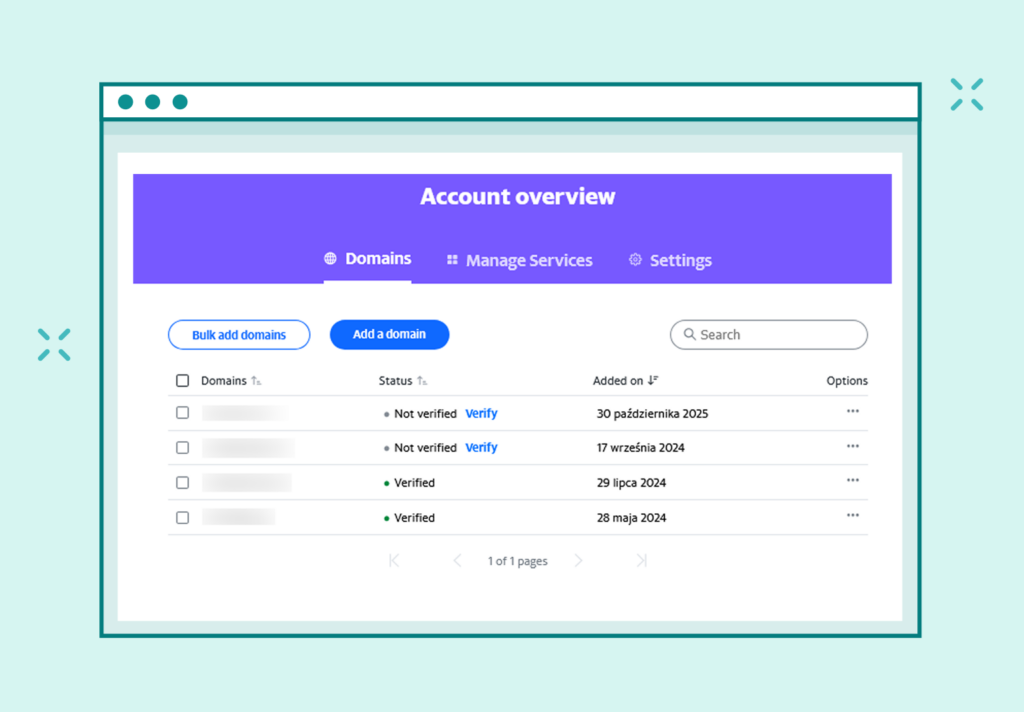
Yahoo Sender Hub is a central platform created by Yahoo for email senders. Its main goal is to help manage sending practices and deliverability to user inboxes within the entire Yahoo ecosystem (including AOL domains). Simply put, it is the command center for your email communication directed at users of these services. Until recently, the platform focused mainly on configuration and authentication functions. It allowed for DKIM domain verification and management of key settings, such as the Complaint Feedback Loop (CFL), but it lacked direct reputation metrics.
The main available features include:
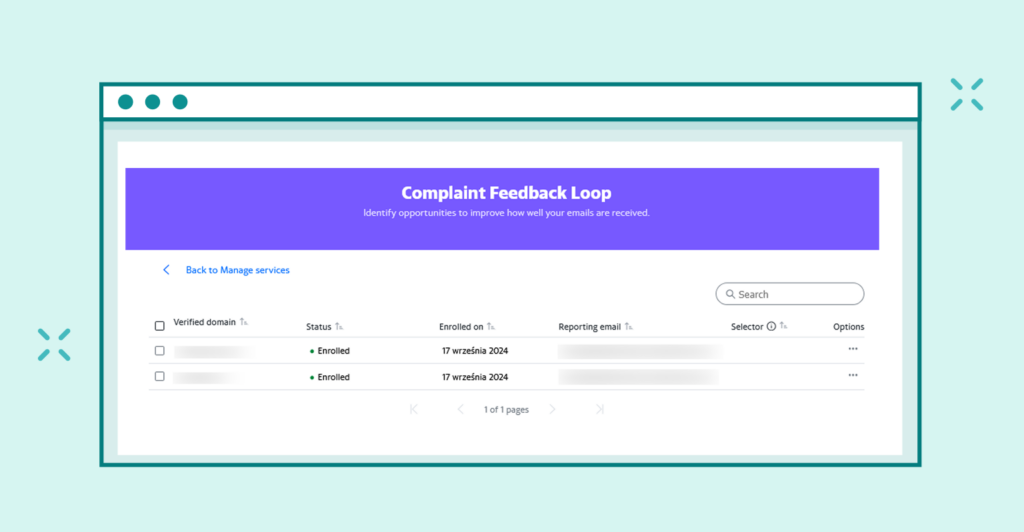
Complaint Feedback Loop (CFL) Management: An extremely important tool that allows senders to receive notifications when their emails are marked as spam by a recipient. This enables a quick response and independent list cleaning, which is crucial for maintaining a good reputation.
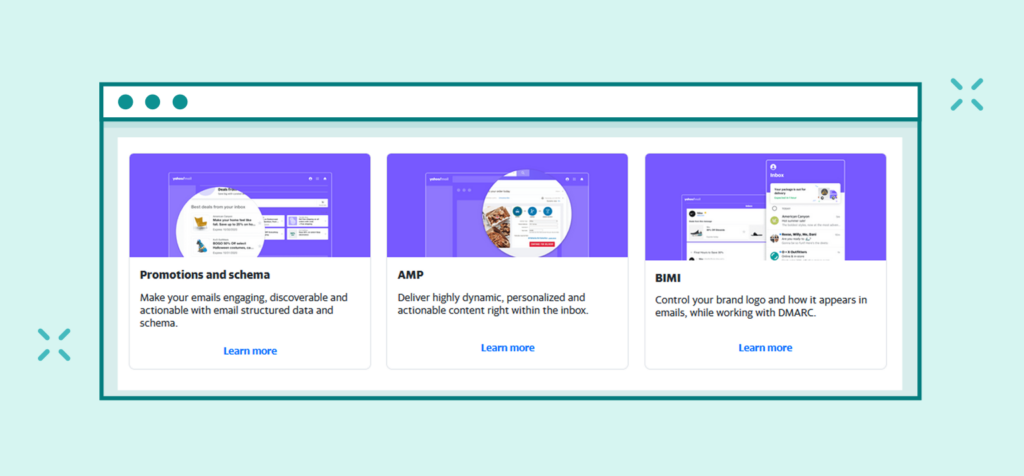
Support for Modern Standards: Yahoo Sender Hub supports technologies like BIMI, AMP for Email, and schema.org markup.
Resources and Documentation: Sender Hub also provides key resources, such as lists of SMTP error codes or best practices.
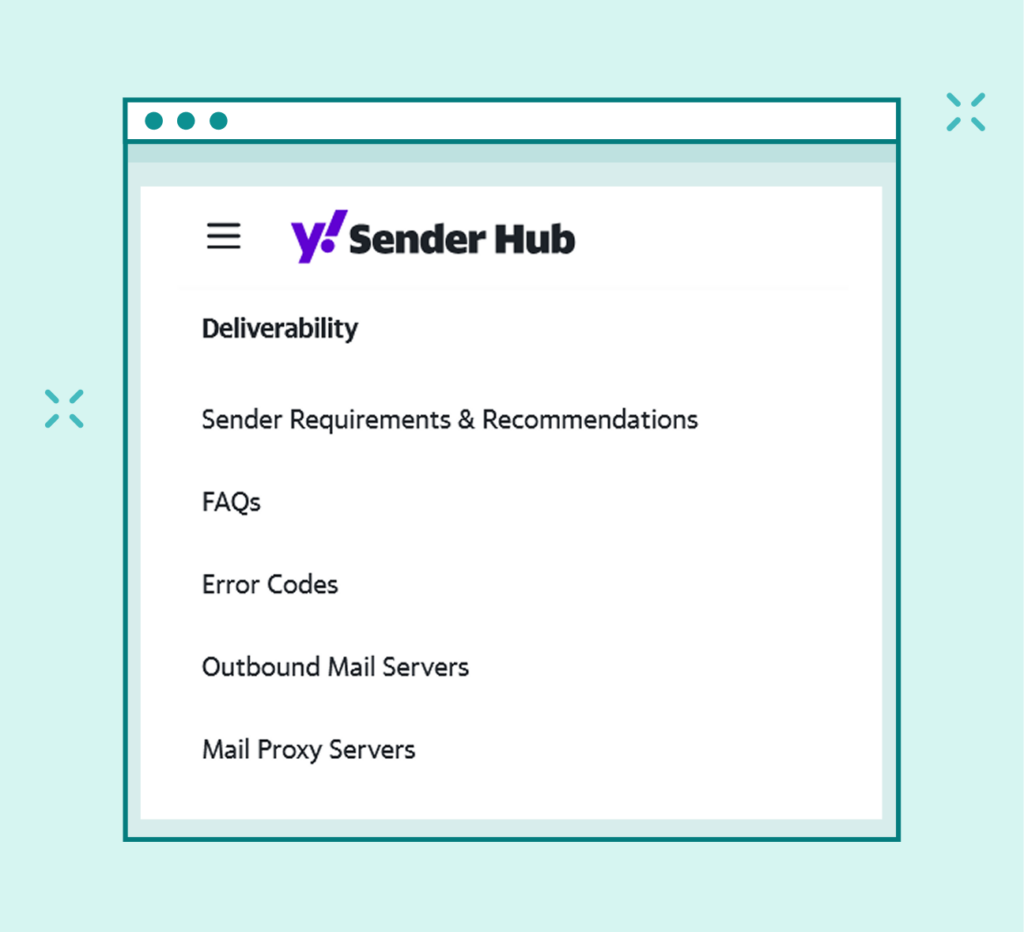
Thanks to this, Yahoo Sender Hub serves as a center for managing domain reputation and compliance with Yahoo’s requirements.
What was clearly missing until now was a dashboard with reputation data. This is precisely the gap filled by the new “Insights” tab. You could say that Yahoo Sender Hub is the equivalent of Google Postmaster Tools, but with additional, built-in management functions (like CFL registration) all in one place. The introduction of “Insights” has made it a fully-fledged reputation monitoring tool.
This is undoubtedly the most important update to the Sender Hub platform in months. After logging in, “Insights” is now the first section you see. As Yahoo’s official announcement confirms, the goal is to provide senders with significantly greater data visibility.
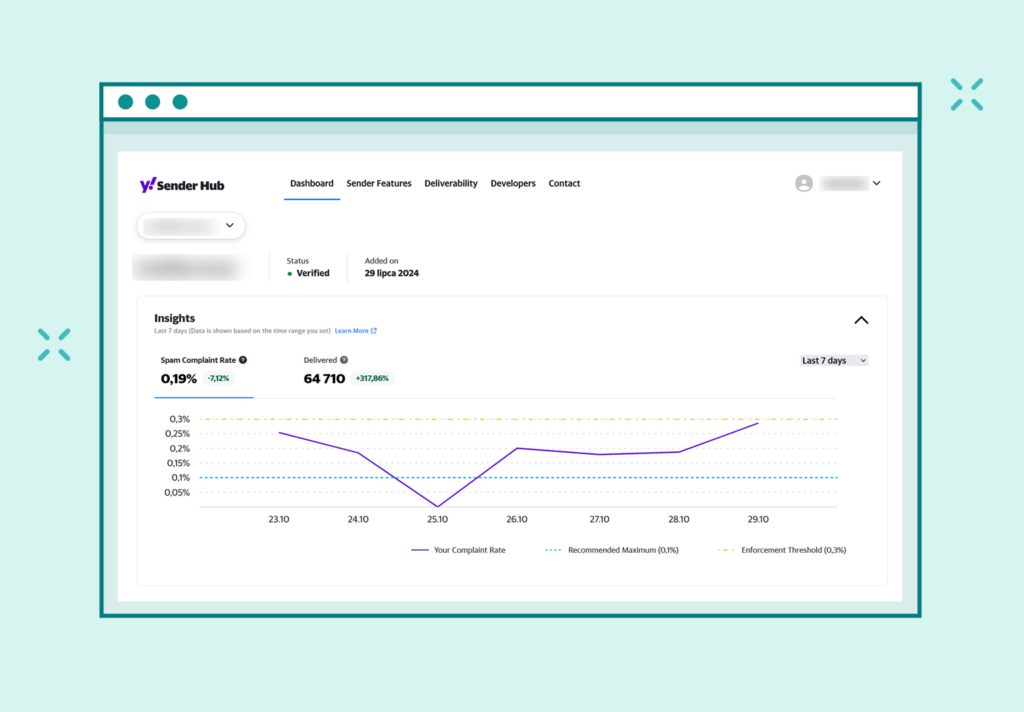
This metric represents a fundamental change in the approach to complaint analytics. Until now, most systems (including Google Postmaster Tools) calculated the complaint rate by dividing the number of complaints by the total number of emails sent. The new spam complaint rate introduces a much more precise methodology:
Spam Complaint Rate = Number of Complaints / Number of Emails Delivered to the Inbox
Why is this such a significant difference? Because this metric measures the real sentiment of users who actually saw your message. The rate is not skewed by data from emails that landed in spam or were rejected.
Moreover, Yahoo provides clear thresholds, visible directly on the chart:
Yahoo recommends keeping the Spam Complaint Rate below 0.1%. Exceeding 0.3% can result in deliverability restrictions.
Important: Don’t compare this metric directly with your ESP data. The complaint rate visible in “Insights” will almost certainly be higher than the one in your email service provider’s panel. This is normal and stems from the difference in methodology:
Alongside the complaint rate, the “Insights Dashboard” presents the volume of delivered messages. It consists of two elements:
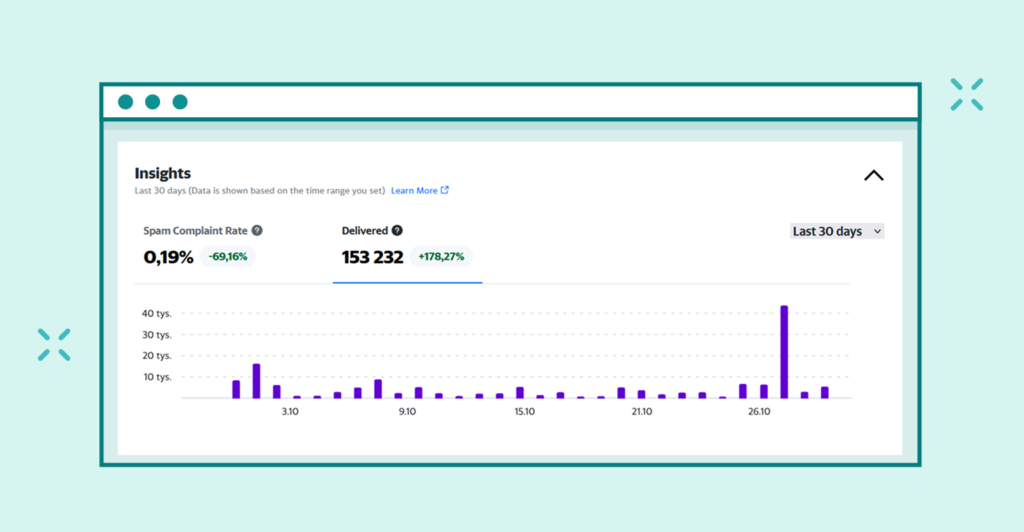
The panel allows for the analysis of historical data dating back up to 180 days.
This structure has two main applications:
All data in the “Insights” tab is aggregated at the DKIM domain level. Data appears after 24-48 hours and is presented in the UTC time zone.
Having access to data is one thing, but the key is to interpret it correctly.
This rate is a direct reflection of recipient reactions.
How to react to the results in practice:
The volume chart is mainly used for better data interpretation and understanding the context:
Setting up monitoring is simple, but it requires a few steps:
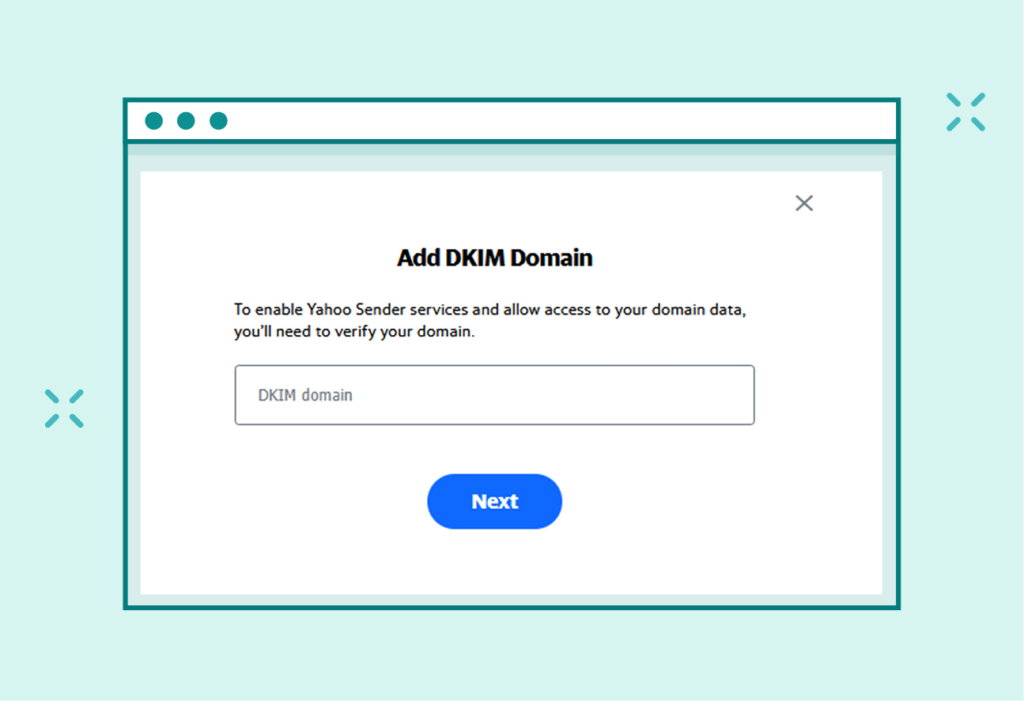
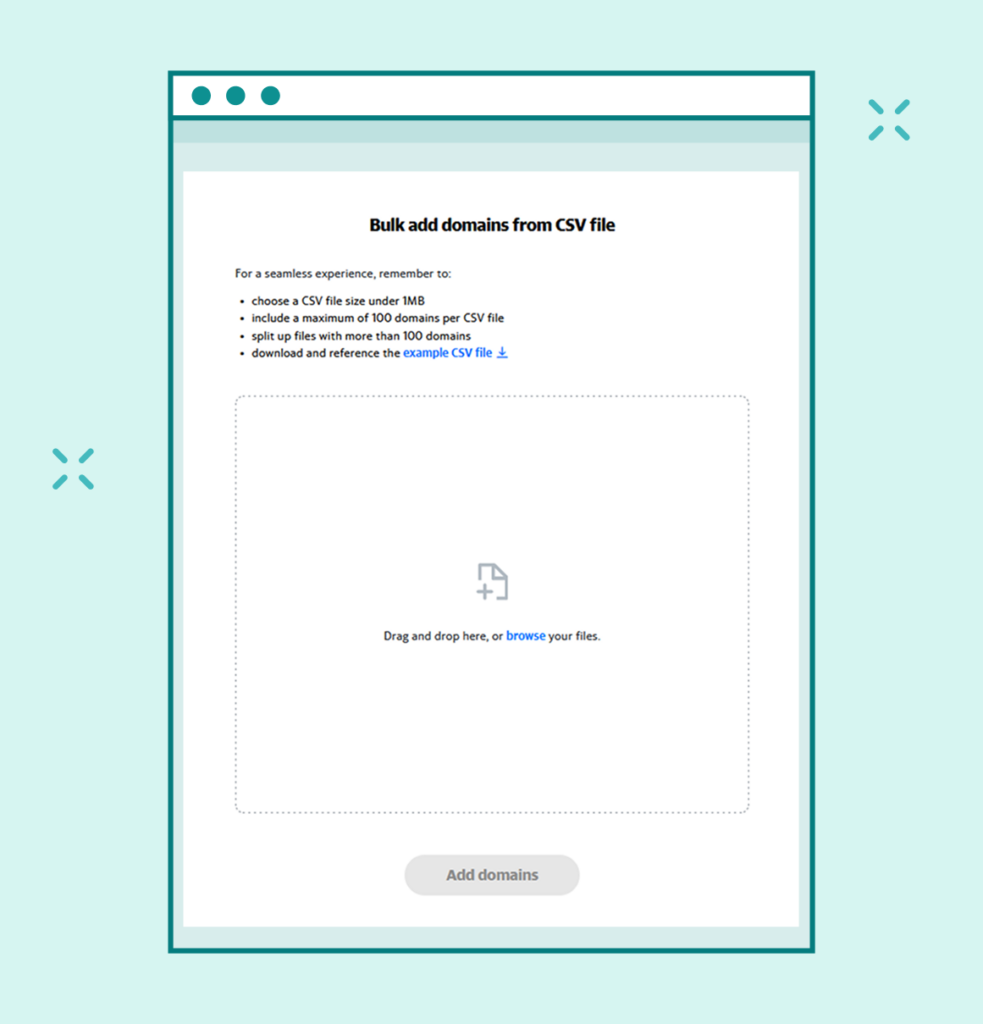
Step 3: Verify domain ownership (DNS TXT)
This is a key technical step. Yahoo will generate a unique TXT record that you must add to your domain’s DNS configuration. This process confirms that you are the owner of the domain.
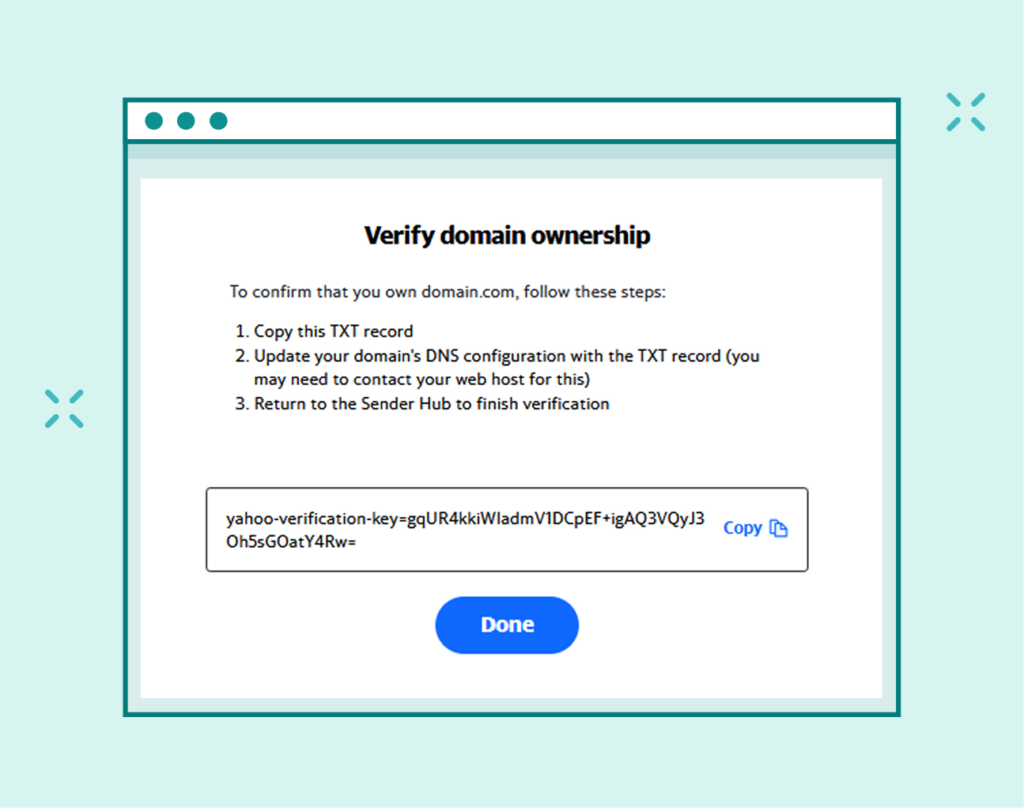
Step 4: Wait for data collection
After successful verification, the platform needs time. Typically, the first statistics appear 24-48 hours after sending begins and a minimum threshold is met.
Pro Tip: Dane w panelu “Insights” są aktualizowane codziennie. Warto tam zaglądać regularnie, a obowiązkowo po każdej dużej kampanii. Wykresy pokazują dane historyczne sięgające do 180 dni wstecz.
Pro Tip: The data in the Yahoo Insights Dashboard is updated daily. It’s worth checking it regularly, and it’s a must after every major campaign. The charts show historical data stretching back up to 180 days.
The introduction of “Insights” by Yahoo coincides with a change in Google’s philosophy. Google retired (on September 30, 2025) its historical reputation dashboards (Domain & IP Reputation). The new version (v2) focuses almost exclusively on “Compliance Status”.
The new Yahoo Insights and the refreshed Google Postmaster Tools v2 show two complementary approaches to sender reputation in email deliverability – one focused on user reception, the other on technical compliance.
| Feature | Yahoo Insights | Google Postmaster Tools v2 |
|---|---|---|
| Main Focus | Recipient Reactions
How users react to emails in the inbox |
Technical Compliance
Whether the sender meets technical requirements |
| Key Metric | Spam Complaint Rate
Rate calculated only from emails delivered to the inbox |
Spam Rate (as a compliance threshold)
Rate must be < 0.3% |
| Thresholds / Assessment | Granular (Percentage)
Panel shows exact threshold values: 0.1% rec., 0.3% enforcement threshold |
Binary (Pass / Fail)
Panel only shows a “Pass” or “Fail” status for each category |
| Historical Data | Available (complaint trends)
Complaint rate trend charts available for up to 180 days |
Retired (current status only)
Historical domain and IP reputation charts were removed in v2 |
| API Access | Currently unavailable | Available
Allows for automatic integration and data retrieval |
| CFL/FBL Management | Integrated
Complaint Feedback Loop management is part of Sender Hub |
Separate process
Requires separate Gmail FBL configuration |
Conclusion: Google focuses on the role of a validator: “Are you meeting our hard requirements right now?” (DMARC, One-Click Unsubscribe, Spam Rate <0.3%). Yahoo “Insights” provides insight into how messages are received after passing verification. It focuses on content quality and user perception, providing the precise Spam Complaint Rate metric.
To succeed in 2025, you need both:
Maximize your email deliverability and security with EmailLabs!
Although Yahoo Sender Hub offers valuable domain reputation data, it still lacks a key element—API integration that would allow for automatic data retrieval.
What does this mean in practice? Currently, Spam Complaint Rate and volume data are available exclusively in the Yahoo Sender Hub panel.
This means that:
For professional senders, this is a significant hindrance. The industry is counting on Yahoo to follow in Google’s footsteps and provide an API soon.
The introduction of the “Insights Dashboard” is a clear signal from Yahoo: the era of guessing your reputation is over. For every sender who takes communication with Yahoo and AOL users seriously, regular monitoring of Yahoo Sender Hub has become essential.
The new platform, especially the Spam Complaint Rate metric, provides direct insight into how Yahoo’s filters evaluate sending quality based on real recipient reactions. Ignoring this data means consciously risking your reputation. While Google focuses on hard technical compliance, Yahoo provides a tool to measure how users actually perceive your messages. You need both of these elements.
If you use Yahoo Sender Hub, it is also worth monitoring your reputation in other ecosystems—e.g., in Google Postmaster Tools – to get a complete picture of your deliverability.
Monitoring data in Yahoo Sender Hub is crucial, but it’s only half the battle. The “Insights Dashboard” shows the overall result – what happened at the domain level. However, it lacks a key element: why it happened at the individual message level.
True deliverability requires not only monitoring but also precise diagnostics. At EmailLabs, we go a step further. While “Insights” helps diagnose general problems, our advanced analytical panel allows you to track the status of every single message. We provide full insight into server responses and detailed logs.
We specialize in ensuring the highest deliverability for your key transactional emails and API-sent automations. Our infrastructure allows you not only to prevent problems but to solve them instantly.
Don’t wait for your complaint rate to hit the red zone. Start optimizing your deliverability performance today!
Contact our experts and learn how to combine data from Yahoo Insights with our reports to prevent deliverability problems before they appear.

Product and Technical Insights Specialist
Natalia abandoned her career as an experimental biologist for the digital universe and new technologies. She likes to know something about everything and everything about something. Breathlessly follows and describes news from the email world. Supports EmailLabs users in integrating, analyzing, and reporting deliverability. Helps to increase domain security with implemented DNS records and BIMI standard, moreover educates on good mailing practices.
See more articles
We live in a world where your customers switch seamlessly between laptops, smartphones, and tablets. They navigate a complex digital ecosystem – checking emails, using mobile apps, and reacting...

We are delighted to announce that Vercom S.A., the company behind the EmailLabs project, has successfully completed the ISO 22301 certification process. This significant achievement underscores our commitment to...

EmailLabs, as part of the Vercom group, proudly announces its full commitment to aligning its ICT services with the latest cybersecurity standards. In response to dynamically changing regulations, the...
We are pleased to announce that MessageFlow, a product from the Vercom S.A. group, has received the prestigious CSA (Certified Senders Alliance) Certification. This recognition not only underscores the...

Modern email systems no longer treat the primary inbox as the default destination for every message. The final classification of an email is the result of a multistage evaluation...

Best practices, Maile marketingowe, Marketing E-mails, Transactional Emails
Mass email sending is a critical strategy for business owners, marketers, developers, and nonprofit managers looking to scale their outreach. Whether you are announcing a new product feature, distributing...

Best practices, Marketing E-mails
Customer feedback is the fuel for business growth, but gathering it effectively requires more than just a list of questions. Email surveys remain the most direct channel for understanding...
Modern email systems no longer treat the primary inbox as the default destination for every message. The final classification of an email is the result of a multistage evaluation...
Best practices, Maile marketingowe, Marketing E-mails, Transactional Emails
Mass email sending is a critical strategy for business owners, marketers, developers, and nonprofit managers looking to scale their outreach. Whether you are announcing a new product feature, distributing...
Best practices, Marketing E-mails
Customer feedback is the fuel for business growth, but gathering it effectively requires more than just a list of questions. Email surveys remain the most direct channel for understanding...

Best practices, Email Marketing, Pytania i odpowiedzi
Mail merge combines a template document with data to create personalized communications. This technique saves time by automatically generating individualized letters, emails, and labels without manual entry. What Is...
IT & Tech, Pytania i odpowiedzi, Technical
When an email travels from sender to recipient, it passes through several critical components of email infrastructure. At the heart of this journey sits the Mail Transfer Agent (MTA)...

Best practices, Deliverability, Google and Yahoo's Requirements, Pytania i odpowiedzi
The world of email marketing is constantly evolving, and leading mail service providers – Gmail, Yahoo, Microsoft, and Apple – regularly update their guidelines for senders. In recent years,...
Gmail, Google and Yahoo's Requirements
You might have noticed a new item in your Gmail sidebar recently – the “Manage subscriptions” tab, often flagged with a blue notification dot. While Google announced this feature...

IT & Tech, Pytania i odpowiedzi, Technical
Efficient email communication isn’t just about sending messages — it also involves integrating email functionality into your business systems and applications. Email APIs (Application Programming Interfaces) serve as the...

One of the most important yet often underestimated elements in shaping a company’s brand perception is the transactional email. In e-commerce, the design of such messages must be carefully...

